What turn rhythm is
Turn rhythm is a regular or deliberately changing time and space pattern of linked turns. It includes the moment the direction change begins, the length of the turn, the transition from one edge to the other, and the repetition of movements through which the skier controls pressure, edging, and guiding the skis.
Rhythm is therefore not just the speed at which left and right turns alternate. It is also connected with their size, shape, finishing, and the point at which the skier enters a new turn. Short turns usually have a higher frequency than long ones, but both types can be skied smoothly or irregularly.
Practical meaning
A stable rhythm helps the skier anticipate the next movement and smoothly shift the center of mass from one turn to the next. It limits unwanted pauses in traverse, sudden ski steering, and delayed reactions. In recreational skiing, it can help control speed because the skier creates turns continuously and uses their shape instead of occasional hard braking.
Rhythmic skiing, however, does not mean mechanically repeating the same movement. Slope angle, bumps, snow quality, space, and speed all change. A functional rhythm adapts to these conditions without losing balance and smoothness.
Pole planting can, especially in shorter turns, support the timing of the transition. However, it should not be the only impulse, without which the skier cannot release the edges or start a new turn. The official U.S. Ski & Snowboard methodology notes that pole work should contribute to timing and rhythm, not make the entire turn change dependent on the movement of the arm.
Rhythm in children's skiing
For a beginner child, rhythm is usually naturally slower and less steady. The child may continue diagonally across the slope between turns for a moment, look for balance, or react only to the coach's cue. The goal is not to increase frequency as quickly as possible, but gradually to connect safely mastered changes of direction.
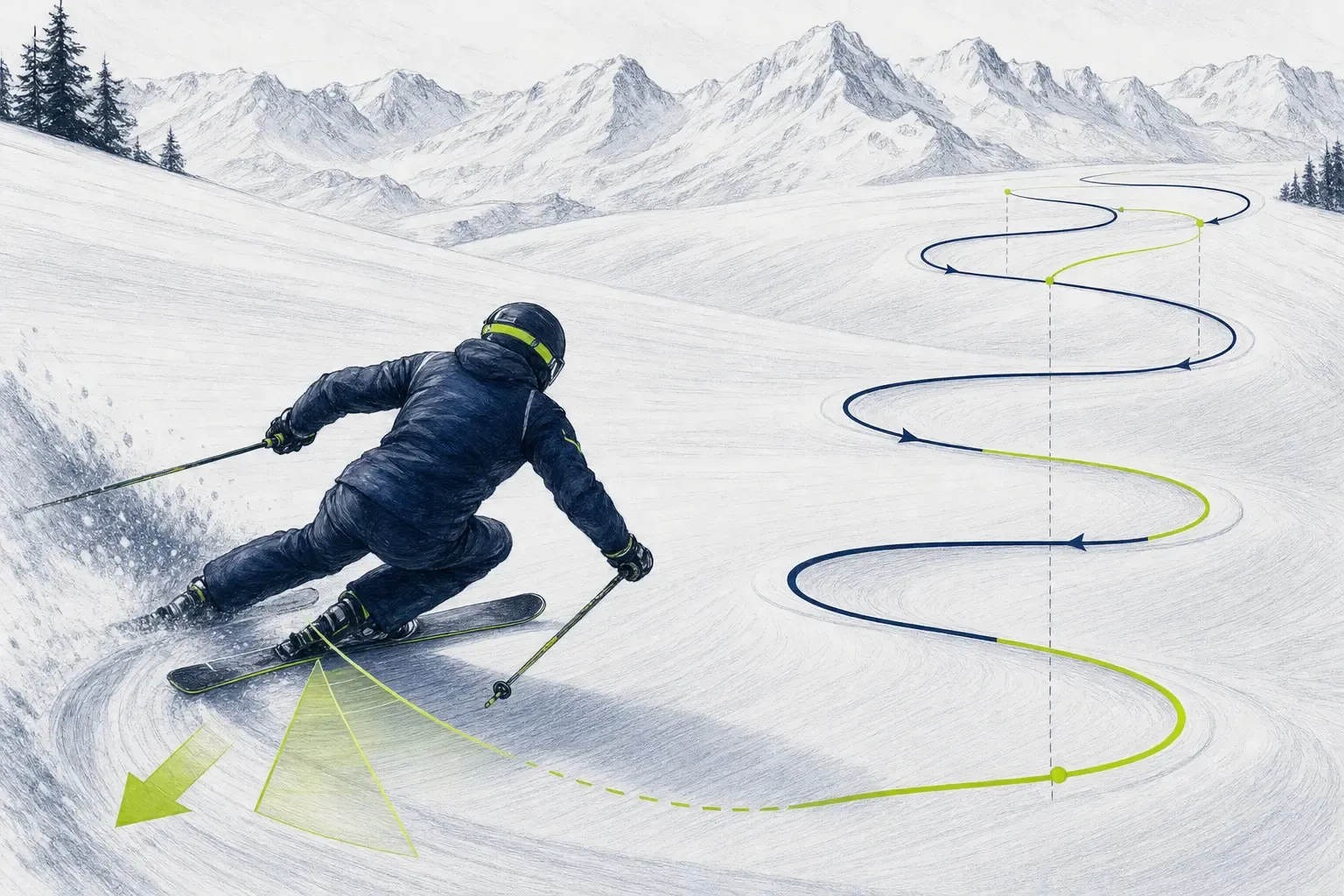
In training practice, simple external cues are used: skiing behind the coach, turns in a marked corridor, counting, clapping, or following set markers. Later, shorter and longer turns can be alternated. The difficulty must match the child's age, ski level, attention, and motor development. Neither the number of repetitions nor the pace can be set universally.
It is important that rhythm does not arise from forced bobbing of the torso. The movements should lead to effective ski work, not just copy the coach's counting.
Race context
In a gate course, rhythm demands are created mainly by the spacing and lateral offset of the gates, the terrain, speed, and the inclusion of combinations. FIS rules define the course-setting parameters for individual disciplines; they do not define one universal
correct rhythm
for skiing.
- The competitor must recognize both regular sections and rhythm changes and adjust line, timing, and movement intensity in time. U.S. Ski & Snowboard lists, among the athlete's development skills, the smooth linking of turns of different sizes and maintaining flow while the course rhythm changes. Especially in slalom, more open gates alternate with vertical combinations, so a fixed turn frequency would be a disadvantage. Typical mistakes and misunderstandings
- Rhythm is confused with speed. Fast movements do not yet have to create well-timed turns.
- A long pause forms between turns. The skier stays on the edges or traversing and starts the next movement late.
- Rhythm stays the same in all circumstances. The skier cannot react to changes in slope, snow, or the layout of the course.
- The child copies the adult's pace. The frequency does not match their strength, range of movement, or ability to keep balance.
Coach's view
The coach does not only watch whether the turns look even. They judge whether they follow one another without the movement stopping, whether the child manages to finish the change of direction, and whether they can consciously adjust the rhythm. A suitable task should first create a clear and repeatable pattern. Only after it is mastered are changes in turn size, tempo, terrain, or gate setup added.
Sources and further reading
- FIS – Alpine Documents: International Competition Rules, edition 6. July 2026
- FIS – Broadcaster Manual Ski Alpine: formats and course design
- U.S. Ski & Snowboard – Athlete Performance Profile
- U.S. Ski & Snowboard – Alpine Guide to Ski Fundamentals: The Turn Model
- U.S. Ski & Snowboard – Alpine Ski Fundamentals Instructor Manual, Level 100
- U.S. Ski & Snowboard – Alpine Level 100 Manual
- U.S. Ski & Snowboard – Level 100 Updates: technical exercises and methodical materials