What the referee means
Referee is a competition official responsible for monitoring and enforcing the rules. In alpine skiing, however, it is also a specific role referred to in the FIS English rules as referee. That is why it is necessary to distinguish between the general term for referees and the specific roles listed in the competition rules.
The referee is not a coach, course setter, or technical delegate. Their task is not to judge the beauty or style of the run. They assess facts that matter for the fairness of the race: compliance with the rules, correct passage through the course, reported infringements, and the conditions under which the racers are to compete.
Referee and jury
In races held under FIS rules, the referee is a member of the jury, that is, the body responsible for the sporting decisions related to the race. The basic jury for alpine races consists of the technical delegate, the referee, and the race director. In speed events, an assistant referee is added. The exact composition, appointment method, and powers must always be checked in the current rules for the relevant competition level.
The jury checks the conditions on the course, applies the rules, deals with disputed situations and protests, and can decide to interrupt, postpone, or cancel the race. The referee is therefore part of the decision-making system, not an unrestricted independent arbiter.
Typical duties include working with the technical delegate and the other jury members, receiving reports of infringements and errors in the course, reviewing the available evidence, and preparing or signing the referee’s report. It publishes, for example, the bib numbers of competitors proposed for disqualification, the reason, and the relevant place on the course. The report must be published in the manner and at the time set by the rules, because the time limit for filing a protest may depend on it.
Other referee roles
Assistant referee (assistant referee) works mainly in downhill and super-G. They help monitor the large course and take part in decision-making as a member of the jury.
Start referee monitors the start area, the readiness of the competitors, and events related to the start. For example, they record delayed or false starts and pass on the relevant reports.
Finish referee oversees the finish area, passage over the finish line, and events at the finish. The start and finish referees provide the jury with expert information, but they are not automatically voting members of it.
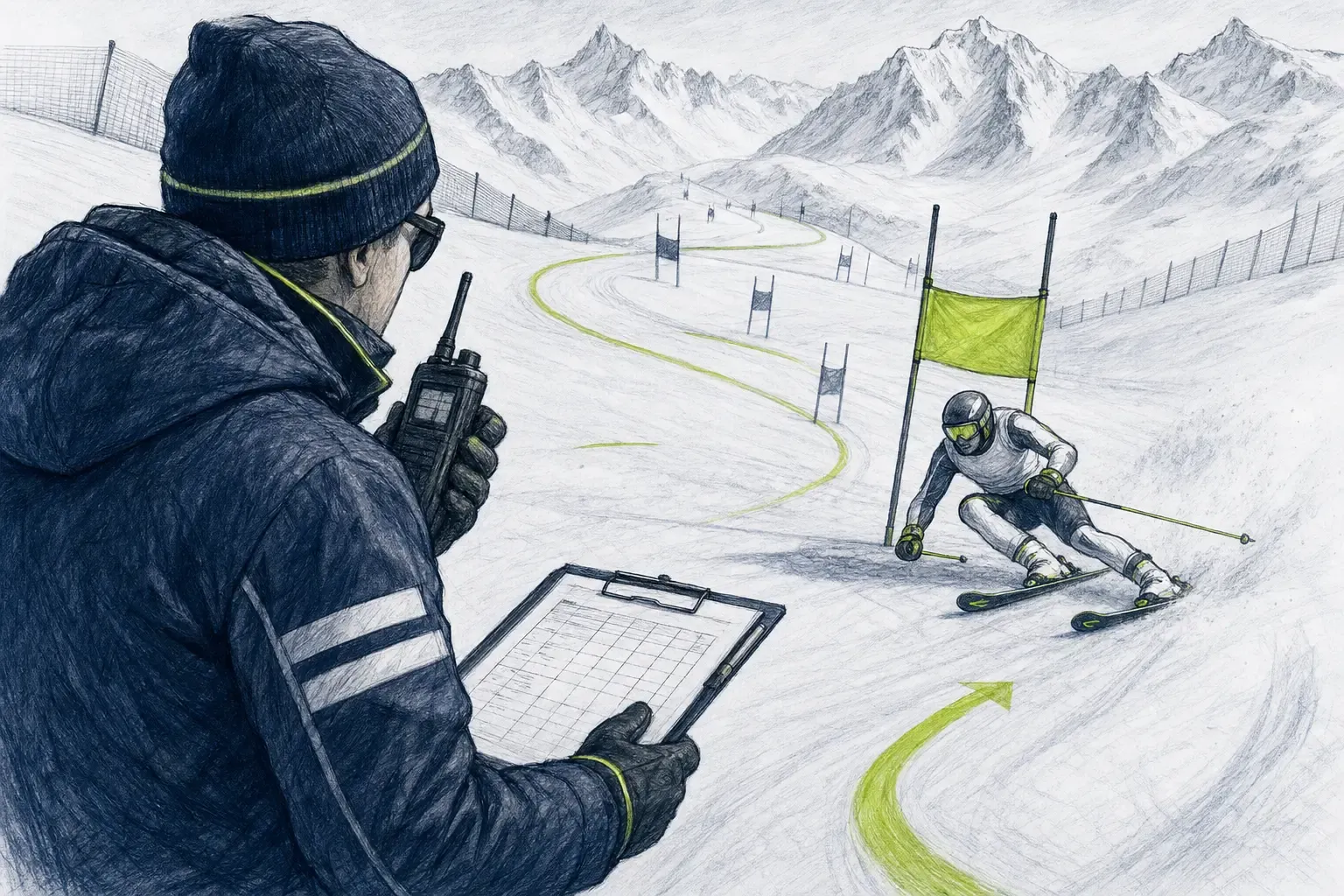
Gate judge monitors the assigned section of the course. They check whether the racer passed the gates in accordance with the rules and record any faults on the prescribed form. Their job is not to cheer, advise the child, correct their line, or decide based on impression. The gate judge’s record is the basis for any further official procedure.
Children’s races
Even in children’s races, judging must be calm, impartial, and easy to understand. A child’s age or inexperience does not change the rule for a correct run through the course, but the organizer and coach should explain the start procedure, the meaning of signals, and what to do after not finishing a run in an age-appropriate way.
A child should not deal with a dispute directly with the gate judge. If the coach notices a possible error in the record or another inconsistency, they note the bib number, gate, time, and verifiable circumstances. Further steps go through the team’s authorized representative and according to the rules of the specific race. A protest is not an argument by the course, but a formal process with a defined subject, method of submission, and deadline.
Common misunderstandings
- The judge and the technical delegate are not the same role. The technical delegate represents the relevant sports authority and usually chairs the jury.
- The race director is not a judge. They are responsible for the organizational and technical running of the race and may also be a member of the jury.
- The gate judge does not determine the ranking. The ranking is based on valid times and official results.
- Did not finish and disqualification are not synonyms. A racer may not finish a run, while disqualification is the result of a specific rule violation.
- Goodwill does not replace the rules. Even with small children, the result cannot be changed just because the mistake was unintentional.
Coach’s view
The coach prepares the young skier to respect the judges as well. Before the race, they briefly explain the correct passage of the gate, the start procedure, and what to do after a fall or interrupted run. After a disputed decision, they separate emotion from verifiable facts. The judge’s ruling can be reviewed through the prescribed procedure, but they should not cast doubt on the official’s integrity in front of the child without evidence.
A good judge knows the current rules, can look up the relevant provision, and decides based on the observed facts. Qualifications and regular training are important because the rules, forms, and competition procedures are continuously updated.
Sources and further reading
- FIS – Alpine Skiing Documents: current international rules, forms and documents
- FIS – Alpine Skiing Officials Education
- U.S. Ski & Snowboard – Alpine Officials
- U.S. Ski & Snowboard – Alpine Competition Officials Education Resources 2026
- U.S. Ski & Snowboard – 2026 Alpine Competition Guide
- U.S. Ski & Snowboard – Alpine Officials’ Manual: Rules, Jury & Technical Delegate
- U.S. Ski & Snowboard – Referee Alpine Study Guide