What the race jury is
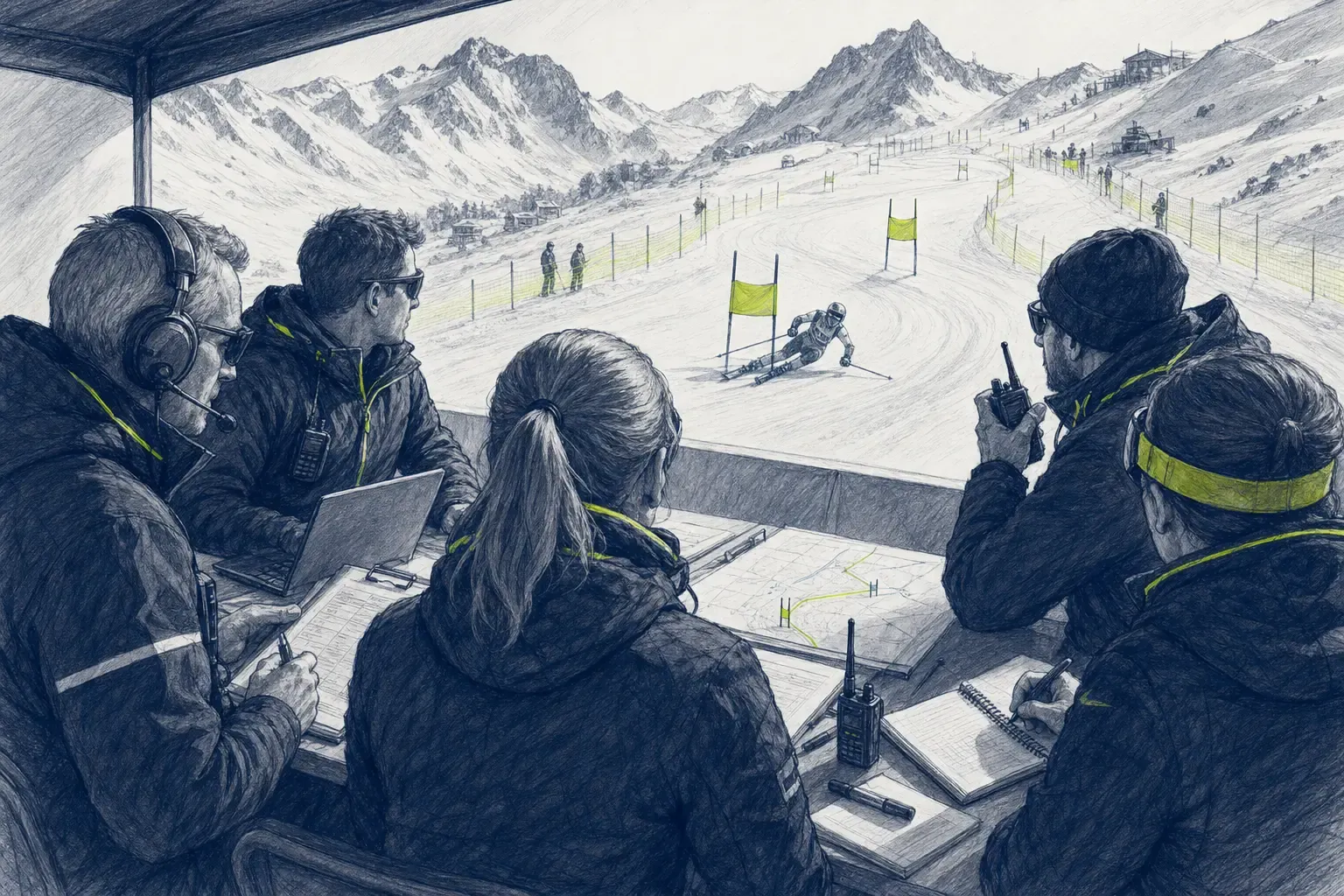
Race jury is the decision-making body of a ski race. It is responsible for enforcing the rules and for technical matters within the closed race area. Its authority begins with the first meeting before the first team captains' meeting and usually ends after the protest period has expired.
The word jury here does not mean a panel that awards points for performance. In alpine skiing, the result is determined by timing and by adding any penalties. The jury makes sure the competition runs safely, fairly, and according to the valid regulations.
Composition under the basic FIS format
In standard international alpine ski races, the voting core of the jury is made up of:
- FIS technical delegate (TD) – oversees compliance with the rules and usually leads the jury meetings,
- chief referee – monitors the sporting side of the competition and prepares materials on possible rule violations,
- chief of race – represents the organizing committee and is responsible for race management on the organizer's side,
- assistant referee – is a jury member mainly in speed events, that is, downhill and super-G.
The start referee and finish referee in regular races provide the jury with important reports, but they are not automatically voting members. The course setter, chief timekeeper, or chief gate judge is also not automatically a jury member. The jury may invite them to provide expert information.
At the Olympic Games, World Championships, and in the World Cup, special rules apply for appointing and composing the jury. Therefore, it is not enough to rely only on the general list of roles; the current rules of the particular competition and its official program are decisive.
What the jury decides on
The jury checks the course readiness, course setting, safety measures, snow conditions, and the organization of official training and races. Depending on the situation, it may for example:
- approve the course or order necessary adjustments,
- change the program, shorten the course or adjust the start area,
- interrupt, postpone, or end the race or training,
- decide on a rerun,
- review protests and evidence of rule violations,
- impose sanctions within their authority,
- decide in exceptional weather, technical, or safety conditions.
Decisions are made by vote and recorded in the minutes. Under the basic version of the FIS International Competition Rules, each voting member has one vote, a simple majority decides, and in case of a tie the technical delegate’s vote decides. Special rules of a specific series may define a different procedure.
The jury is not a rescue or medical service. It assesses whether the competition can be held safely, but the actual medical, rescue, and technical tasks are carried out by the relevant members of the organizing team.
Children’s races
Not all children’s races are FIS events. In club, regional, and national competitions, the composition of the jury and the method of appointing it are governed by the rules of the relevant federation and the race announcement. The principle remains similar, however: decisions should not be made by a single coach, parent, or organizer without the defined procedure.
A young competitor communicates with officials mainly through the coach or team leader. A parent should not enter the course, address gate judges while they are performing their duties, or try to influence the jury’s decision. If the rules allow a protest, it is filed by an authorized representative in the prescribed manner and within the set deadline.
Coach’s view
Before the race, the coach should check the jury members, attend the team captains’ meeting, and know how decisions and results are published. A safety issue is reported clearly: the exact place, time, and nature of the risk are given. It is necessary to distinguish between a question, a request for explanation, and a formal protest.
When working with children, it is important to explain the jury’s decision calmly. Disqualification does not necessarily mean intentional misconduct or unfairness; often it is an incorrect passage of a gate, a false start, or another precisely defined rule violation. Respect for officials and proper handling of unclear situations are part of sports education just as much as skiing technique.
Sources and further reading
- FIS – Alpine Skiing Documents: current International Competition Rules, World Cup Rules and jury forms
- FIS – International Competition Rules for Alpine Skiing, edition 5. July 2024, article 601.4
- FIS – Rules for the Alpine FIS World Cup, special provisions on the jury
- FIS – documents for world championships and Olympic competitions
- U.S. Ski & Snowboard – 2026 Alpine Competition Guide
- U.S. Ski & Snowboard – Alpine Competition Officials Education Resources
- U.S. Ski & Snowboard – Alpine Officials: roles and professional qualifications of referees