What is a protest
Protest is a formal procedural step in which an authorized representative objects to a specific fact or decision in a ski competition. It is not an informal question, a parent’s complaint at the finish, or a general disagreement with the result. A protest must meet the rules regarding the reason, method of filing, deadline, and protest deposit.
In alpine skiing, protests are governed mainly by Articles 640 to 647 of the FIS International Competition Rules (ICR). For specific races, the wording of the rules, national addenda, and the competition bulletin in force on the day of the event always apply. FIS published the current ICR for alpine disciplines on 6. July 2026.
What a protest can be filed against
The FIS rules distinguish protests:
- against the acceptance of a competitor or their equipment,
- against the course or its condition,
- against a competitor or official for conduct during the competition,
- against disqualification,
- against timing,
- against instructions or decisions of the jury, if the rules allow them to be challenged by protest.
A protest is not meant to re-evaluate every situation a team is unhappy with. The jury should accept it only when it is based on specific evidence. A mere statement, impression, or coach’s conviction is not enough. A decision already made may be reviewed by the jury again only if new evidence related to the original case appears.
Who files a protest, where, and how
Under FIS regulations, national ski associations, coaches, and team leaders are authorized to file a protest. In children's races, the formal procedure is therefore usually handled by the coach or appointed team leader, not by the child and not by a parent through a verbal objection.
A protest is submitted in writing at the place designated on the official notice board or announced at the team captains’ meeting. It must be thoroughly justified and supported by available evidence. The ICR set the protest deposit at 100 CHF or an equivalent amount in another valid currency. If the protest is upheld, the deposit is returned; a late protest or a protest without the deposit is not considered. At a national event, its bulletin and the relevant national regulations must be checked.
Protest deadlines
The deadlines are short and vary depending on the subject of the protest. According to the ICR, a protest against the acceptance of a competitor must be filed before the draw, and a protest against the course or its condition no later than 60 minutes before the start of the race. An objection against a competitor, equipment, or improper conduct of an official during the competition must be filed within 15 minutes after the last competitor crosses the finish line.
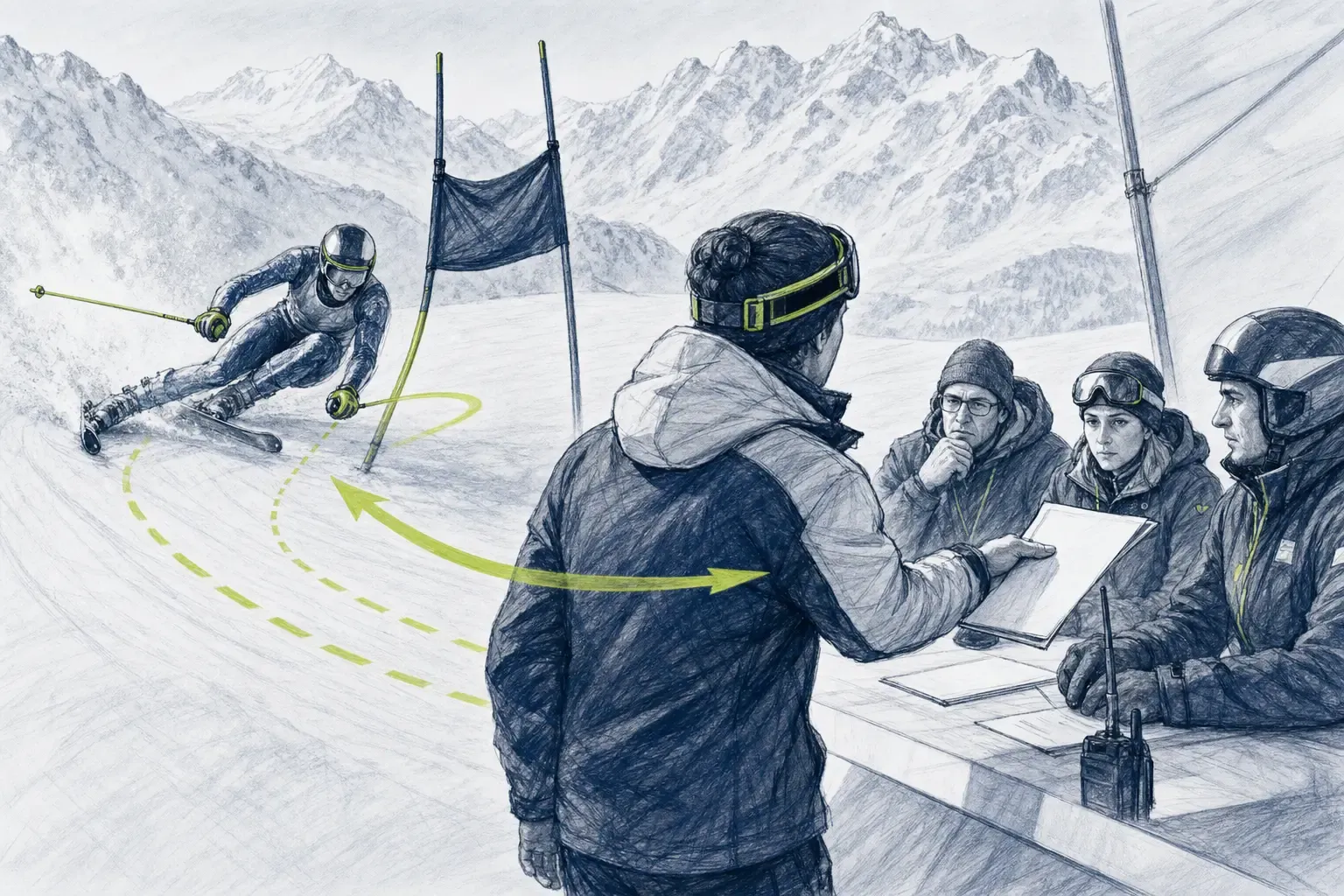
A protest against a disqualification must be filed within 15 minutes of its publication or announcement. When timing is involved, the 15-minute deadline runs from the publication of the unofficial results. Any instruction from the jury must be addressed immediately. The coach must therefore monitor the official board and record the time the decision was posted; second-hand information is not a reliable starting point for the process.
How the jury decides
The competition jury decides on the protest. It assesses the evidence submitted and may hear the affected racer, the team leader, gate judges, or other officials. Depending on the nature of the case, it may also work with official records, photos, video, timing data, or equipment inspection documentation.
The jury’s decision is recorded and announced through official channels. An appeal is not the same as a protest. It is a further, separate step in challenging a jury decision and may be used only under the conditions set out in the rules.
Protest in children's races
The child should not be responsible for handling the dispute. Their job is to calmly tell the coach as soon as possible what happened: where the incident took place, at which gate, who was present, and what they directly saw or felt. They should not approach the officials, gather statements from other children, or argue with the organizers.
The coach checks the facts, the rule, the deadline, and the available evidence. At the same time, they must distinguish a protest from a request for permission for a substitute run. If an incident on course may create the right to a rerun, action must be taken immediately according to the relevant rule and the officials’ instructions; a later protest does not replace the correct procedure during the run.
Typical misunderstandings
- An informal discussion with the official is not a filed protest.
- A parent’s video may be evidence, but by itself it does not determine the outcome of the case.
- A protest does not automatically mean a rerun or a change in the results.
- Disagreement with a gate judge’s decision is not enough without a specific reason and evidence.
- A protest and an appeal are two different procedural steps.
From a coach’s point of view, it is important to act quickly, clearly, and without pressure on the child or the officials. A protest is meant to protect the fairness of the competition, not to serve as a tactical tool after a bad run.
Sources and further reading
- FIS – Alpine Documents: current ICR rules, forms, and jury decisions
- FIS – International Competition Rules for Alpine Skiing, articles 640–647
- FIS – General Regulations
- U.S. Ski & Snowboard – 2026 Alpine Competition Guide
- U.S. Ski & Snowboard – Alpine Competition Officials Education Resources
- U.S. Ski & Snowboard – Alpine Rules and Equipment Resources