What DIN means
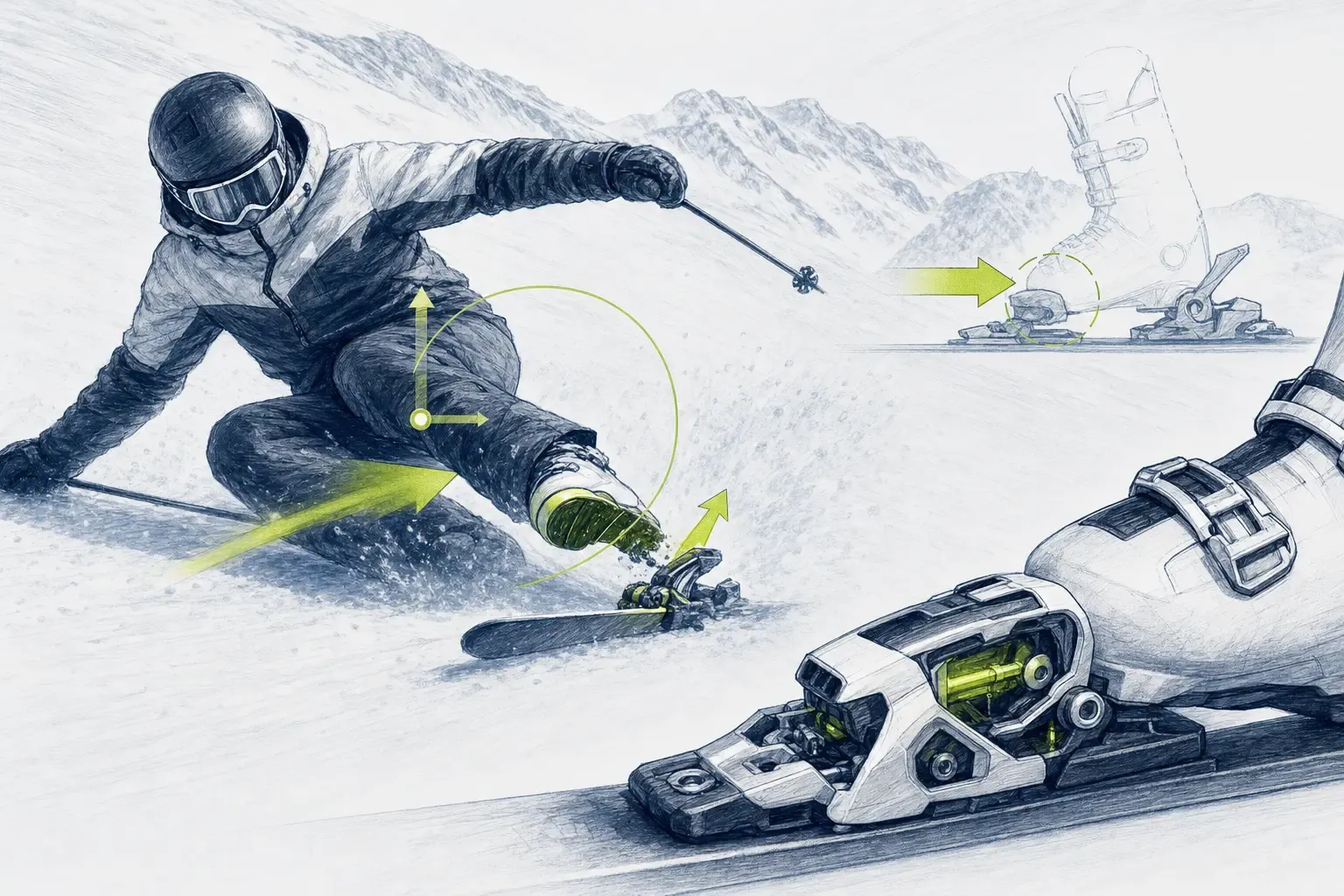
DIN is the commonly used, though technically simplified, name for the release value of an alpine ski binding. The number visible in the toe and heel windows of the binding is also referred to in technical terminology as the release value or adjustment value, or the Z value.
It is not a figure in kilograms or a force that can be simply derived from the skier's weight alone. The number represents a mechanism setting that corresponds to standardized release torque ranges. Under a certain load, the binding must allow the ski boot to separate from the ski. Standard ISO 9462 sets out the requirements and test methods for alpine bindings designed for children, juniors, and adults. ISO 8061 deals with selecting recommended release torques.
However, the binding cannot recognize every dangerous fall and does not guarantee protection against all injuries. In some falls, the load may not act in the direction or manner that triggers the mechanism to release.
What the setting depends on
The correct value is not determined by guesswork or by another skier's setting. When choosing the starting value, the service mainly takes into account:
- the skier's body weight and height,
- age,
- skiing type, meaning the style and intensity of skiing,
- the boot sole length stated in millimeters,
- the type, range, and condition of the binding,
- the compatibility of the boot with the binding.
Boot sole length is not the same as Mondopoint boot size. It is marked on the shell and affects the mechanical torque acting on the binding. Two skiers of the same weight therefore do not have to use the same setting.
Setting the number with a screwdriver is not enough. The mounting, heel position and its pre-tension, toe function, condition of the sliding and contact surfaces, sole wear, and the compatibility of the entire ski-binding-boot system must be checked. A subsequent functional test on a measuring device verifies whether the binding really releases within the required range. The value in the window and the actual measured release can differ if the system is damaged, dirty, or set incorrectly.
DIN in children's skiing
For a child, the current data must be used. Children grow, change ski boots and boot sole lengths, and gradually move to a different skiing level. A setting from the previous season therefore cannot automatically be considered correct.
A children's binding must have a suitable range of release values and must be compatible with the boot used. A high maximum value on a racing binding is not a sign that the binding is suitable for a small or light child. What matters is the usability of the specific system in the range of the value intended for the given skier.
Too low a setting can lead to unwanted release while skiing. Too high a setting can prevent release in a fall. Increasing the value
to be safe,
Race context
FIS defines release bindings as part of a functional ski system that releases the ski boot when a preset load is reached. Race skiing can involve higher speeds, forces, and the risk of an unintended release, but by itself it is not a reason to arbitrarily increase DIN.
The decision on the setting should be based on a standardized procedure, the manufacturer’s instructions, and inspection by a qualified technician. A coach may describe the situation in which the binding released and assess the skiing context, but without the proper equipment they should not replace a service test.
Common misconceptions
- “DIN 5 means 50 kilos.” It does not. DIN is not a weight value.
- “Siblings can have the same setting.” Only if a professional procedure independently arrives at it for each of them.
- “If the binding did not release in a fall, the DIN is definitely too high.” Not every fall creates a direction and force of loading suitable for release.
- “If the binding released once, the value needs to be raised.” First check the cause, the boot, the mounting, the pre-load, and the binding’s function.
- “It is enough to copy the number from old skis.” A different boot, sole length, or binding design can change the resulting setting.
- “A racer needs the highest possible DIN.” The goal is not the maximum value, but proper and verified binding function.
Coach’s view
A coach watches whether the release was preceded by a fall, impact, edge catch, or only normal loading in a turn. They note which part of the binding released, check for visible dirt or damage, and send the equipment to a technician. Especially with children, it is advisable to regularly verify that they are using the same ski boots for which the binding was set.
A specific DIN number cannot be safely recommended remotely. Setting, mounting, and measuring release values belong to professional service, which follows the relevant standard and the binding manufacturer’s instructions.
Sources and further reading
- ISO 9462:2023 – Alpine ski-bindings — Requirements and test methods
- ISO 8061:2019 – Alpine ski-bindings — Selection of release torques values
- ISO/TC 83/SC 4 – Snowsports equipment, catalog of standards including ISO 8364, ISO 8614 and ISO 9465
- FIS – current documents and Specifications for Alpine Competition Equipment 2026/27
- FIS – Specifications for Alpine Competition Equipment 2025/2026
- ISO 9462:2014 – previous edition of the standard for alpine ski-bindings
- ISO 8061:2004/Amd 1:2006 – historical edition of the standard for selection of release torques values