What is a gate
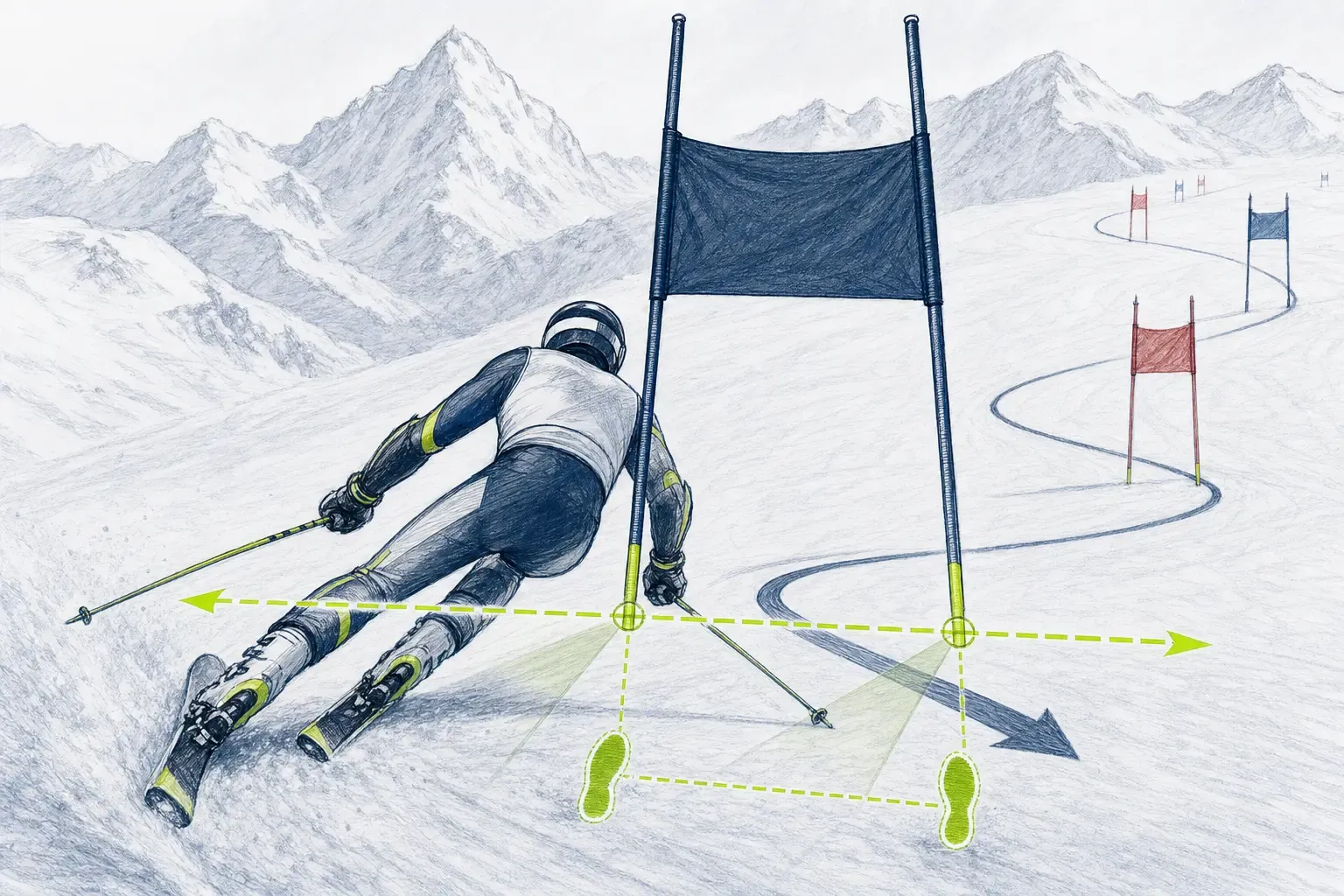
Gate is a part of a marked ski course that sets the direction and the point where the racer passes. A slalom, giant slalom, super-G, or downhill course is made up of a series of numbered gates. Their spacing determines the rhythm, the radius of the turns, changes of direction, and partly also the speed.
The exact form of a gate depends on the discipline. In slalom, a gate made of slalom poles is used; in single-pole slalom, most places have only a turning pole. The first and last gate, offset gates, and slalom combinations have special requirements. In giant slalom, super-G, and downhill, a gate consists of four poles and two colored gate panels. Gates alternate in red and blue along the course. Dimensions, distances, and construction methods are regulated separately for each discipline; there is therefore no single universal gate width.
Correct gate passage
Whether the skier touches or knocks over the poles does not determine a correct passage. What matters is the gate line. According to the basic rule, the tips of both skis and both feet of the racer must cross it in the correct direction. In a two-pole gate, this line is defined by the gate poles in question. In single-pole slalom, an imaginary line between the turning poles is assessed together with the normal racing line.
A typical slalom mistake is straddling a pole (Eng. straddle): one ski passes on the wrong side of the turning pole, so the skis or feet do not cross the gate line in the prescribed way. Such a passage is a gate fault and can lead to disqualification in a race. Gate judges monitor the passages, and in disputed cases the jury decides according to the applicable rules.
A hit to a breakaway pole is not a fault by itself. Modern slalom poles bend on contact and return to their original position after the passage. Flexible poles, safer mounting, and tear-off or release gate panels reduce the risk of injury on contact, although they do not eliminate it entirely.
Gate in children's training
In children's training, a gate has two roles. It teaches the child to react to a spatial task and at the same time helps the coach create the desired rhythm, direction, or turn shape. For a young skier, however, the first goal should not be the tightest possible pass next to the pole. Priority should be balance, speed control, a smooth line, and the ability to look ahead.
A common training practice is to progress from cones, colored markers, and short brushes to full breakaway poles. The choice depends on age, skiing level, motor development, slope gradient, and conditions. A course that is too narrow or rhythmically demanding can force the child into abrupt braking, torso rotation, or uncontrolled impacts with the poles. Such a course does not develop proper technique just because the child can finish it.
Slalom has more gates and requires faster direction changes, while giant slalom uses wider spacing and longer turns. Children usually first encounter technical disciplines; moving on to speed disciplines requires an appropriate level, suitable terrain, equipment, and organized guidance.
Common misunderstandings
- A gate is not just a swinging pole. In the rules, it means the entire marked element of the course.
- The pole does not determine where the turn begins. The racer usually prepares the change of direction before the gate and finishes the turn after it.
- A knocked-down pole does not automatically mean a mistake. What matters is crossing the gate line correctly.
- A tighter line is not always faster. An overly direct line can lead to a late turn, skidding, or hard braking.
- A training setup does not have to be a race course. Brushes, cones, or simplified gates are teaching aids, not automatically gates that meet competition rules.
Coach’s view
The coach does not only watch how far the skier is from the pole. They assess whether the child recognized the gate in time, chose an appropriate line, started the turn in the right place, and left the gate in balance and ready to prepare for the next element. The gate is therefore a reference point and part of the movement task — not a target to hit at all costs.
Sources and further reading
- FIS – Alpine Skiing Documents: International Competition Rules, flex poles and gate panels, current documents 2026/27
- FIS – Event Marketing: Specifications for Alpine Competition Equipment 2026/27
- FIS – Making Alpine Skiing Safer Over the Years
- U.S. Ski & Snowboard – 2026 Alpine Competition Guide
- U.S. Ski & Snowboard – Alpine Competition Officials Education Resources
- U.S. Ski & Snowboard – Alpine Events: Slalom, Giant Slalom and Speed Events