What training intensity is
Training intensity describes how demanding an exercise, run, or a particular part of training is in relation to the athlete's current performance. It mainly answers the question: How hard is the skier working right now?
Intensity must not be confused with volume, that is, for example, with training duration, number of runs, or number of repetitions. A one-hour training session can have low intensity, while several short race runs can be very intense. Together with duration, frequency, and other factors, intensity creates the overall training load. Expert consensus documents therefore recommend distinguishing between the work performed and the athlete's individual response.
External and internal intensity
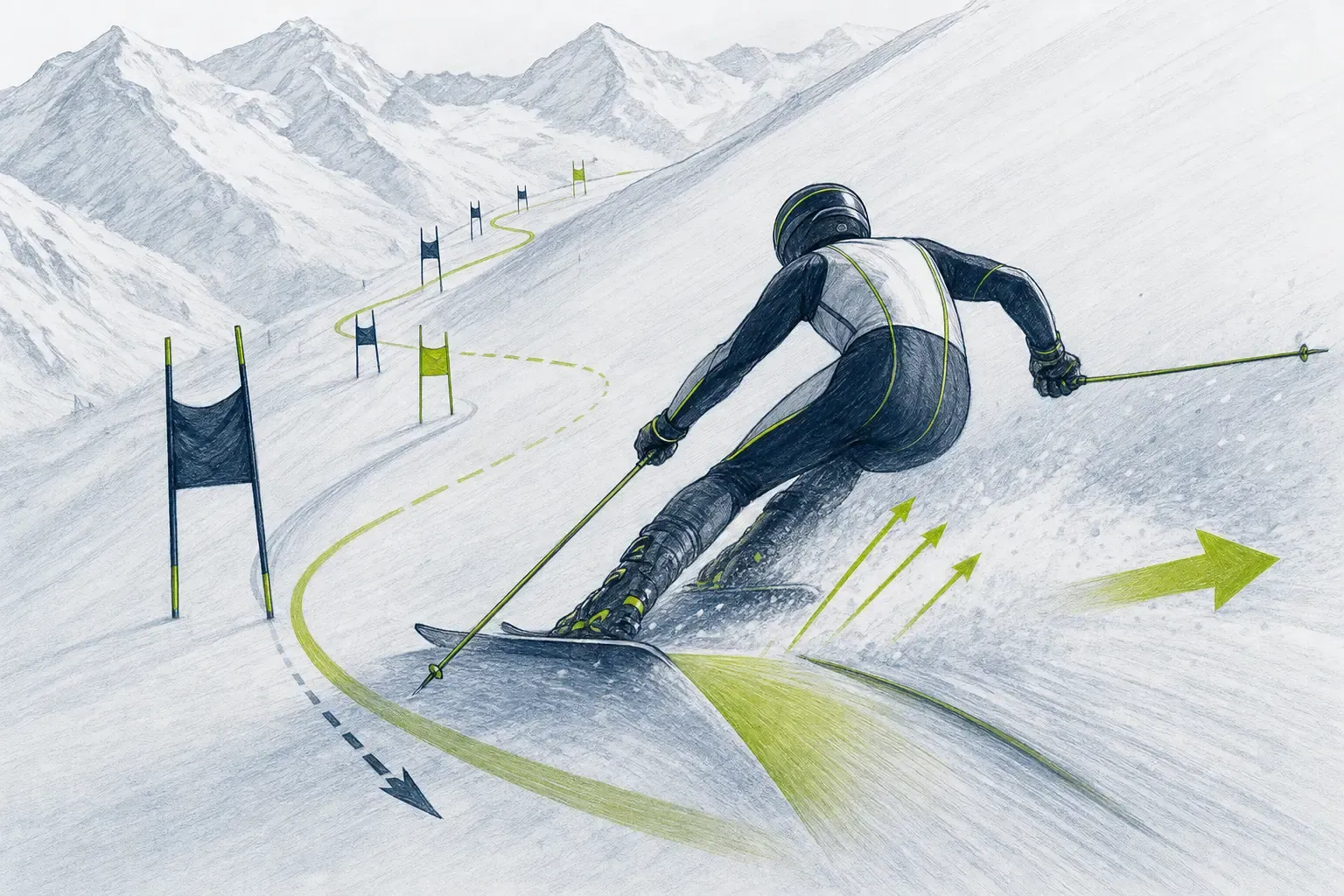
External intensity describes the difficulty of the assigned task independently of how the skier experiences it. In physical preparation, it may be characterized by movement speed, resistance, weight of the barbell, or pace. On snow, in training practice, it mainly includes skiing speed, slope and variety of terrain, rhythm and placement of gates, the required dynamics of turns, or the difficulty of performing the task.
Internal intensity is the physiological and psychological response of a specific athlete. It can be monitored, for example, by heart rate or by the subjective rating of effort - RPE (rating of perceived exertion). The same course may be suitable for a rested racer, but after a series of runs, during illness, or when lacking sleep, it can become very demanding. That is why intensity cannot be reliably determined only from the training plan or the group average.
In alpine skiing, heart rate alone also does not provide the full picture. A run is interrupted by lifts, waiting, and breaks, while including short sections with high strength, coordination, and anaerobic demands. Alpine skiing also requires a combination of strength, endurance, balance, agility, and coordination.
How intensity is monitored
In club practice, it is useful to combine several data points:
- planned goal and difficulty of the task,
- duration and number of quality runs or repetitions,
- speed, terrain, and conditions,
- technical accuracy and movement stability,
- heart rate, if it is suitable for that type of training,
- subjective rating of effort,
- fatigue, pain, motivation, and the athlete’s overall readiness.
With the session RPE method, the rating of effort for the training is combined with its duration. The result is a simple estimate of the overall internal training load, not pure intensity. The number alone therefore cannot be interpreted without context. Research with adolescents confirms the frequent use of RPE, heart rate, and training duration, but at the same time points out that the relationships between an individual indicator, performance, illness, and injury are often unclear.
The intensity planned by the coach may also not match the intensity felt by the athlete. The difference may be caused by fatigue, fitness level, health condition, stress, or a different understanding of the task. A child’s feedback is therefore not disobedience or weakness, but information that needs to be compared with the coach’s observation.
Intensity in children and young skiers
With children, it is not possible to automatically use the same intensities or the same way of assessing them as with adults. The response is influenced by biological maturation, physical growth, training experience, technical level, and the ability to recognize and describe effort. A systematic review of adolescent athletes therefore recommends taking maturation status into account when assessing load and not relying on a single measure.
In training practice, simple verbal categories can be used for younger children, such as easy, moderate, and very hard. More important than the exact number is consistency: the child should gradually understand what is being assessed, and must not see a high value as the result of competing with others.
Intensity should not be increased only by sending the child down a steeper slope or forcing them to ski faster. For a beginner, even slow skiing can be intense if it requires great concentration, uncertain balance, and conscious control of every movement. On the other hand, a technically advanced skier can handle higher speed with less internal effort.
In dryland training, the difficulty of strength exercises must match the child’s movement competence. The international consensus on youth strength training emphasizes proper technique, qualified supervision, and the gradual adaptation of the program to the athlete’s age, experience, and abilities.
Race context and the coach’s view
High intensity in race skiing does not mean maximum speed only. It can also be created by the start acceleration, a demanding gate rhythm, limited time for decision-making, or the need to maintain technique under fatigue. A race simulation therefore counts as an intensive session even when the number of runs is small.
The coach should distinguish three forms of intensity:
1. planned – what the training is meant to provoke, 2. performed – how demanding the task actually was, 3. perceived – how the particular skier experienced it.
The practical goal is not to reach the highest possible intensity in every training session, but to choose an intensity at which the purpose of the session is fulfilled. When learning a new movement, lower speed and full control may be appropriate. In a race simulation, the goal may be high speed and decision-making under pressure. If technique, attention, or the ability to respond to instructions deteriorates significantly, another repetition may no longer bring the planned quality.
Common misunderstandings
- A long training session does not have to be intense. Duration belongs primarily to volume.
- A high heart rate does not automatically mean a quality ski training session. It does not assess technique or coordination demands.
- The same task does not have the same intensity for everyone. Fatigue, ability level, and health status also matter.
- Not every run has to be maximal. Technical learning and race simulation have different goals.
- A single number does not predict injury. Load management must include multiple indicators and a longer-term context.
Intensity is therefore a tool for managing training, not a measure of courage or a way to punish. For a young skier, it should support learning, long-term development, and a safe progression toward the demands of race skiing.
Sources and further reading
- Bourdon et al. – Monitoring Athlete Training Loads: Consensus Statement
- Schwellnus et al. – IOC consensus statement on load in sport and risk of illness
- Soligard et al. – IOC consensus statement on load in sport and risk of injury
- Methods of Monitoring Internal and External Loads in Adolescent Athletes: Systematic Review
- Internal Training Load Perceived by Athletes and Planned by Coaches: Systematic Review and Meta-Analysis
- Lloyd et al. – Position Statement on Youth Resistance Training: International Consensus
- Andersen, Montgomery – Physiology of Alpine Skiing