Warm-up run is one of the first controlled runs on snow before the main part of training or a race start. Its goal is to transfer the readiness gained in the off-ski warm-up into a specific skiing movement. The skier gradually checks balance, range of motion, ski response, and the current slope conditions.
In this sense, it is a training term, not a separately defined mandatory action in the FIS rules. A warm-up run is also not a replacement for a general warm-up. The FIS professional consensus understands preparation for snow sports more broadly: it includes physical and mental activation, raising body temperature, and preparing the neuromuscular system for athletic load. Direct scientific evidence on the effect of one specific warm-up run is limited; research mainly focuses on the entire warm-up routine.
What it should look like
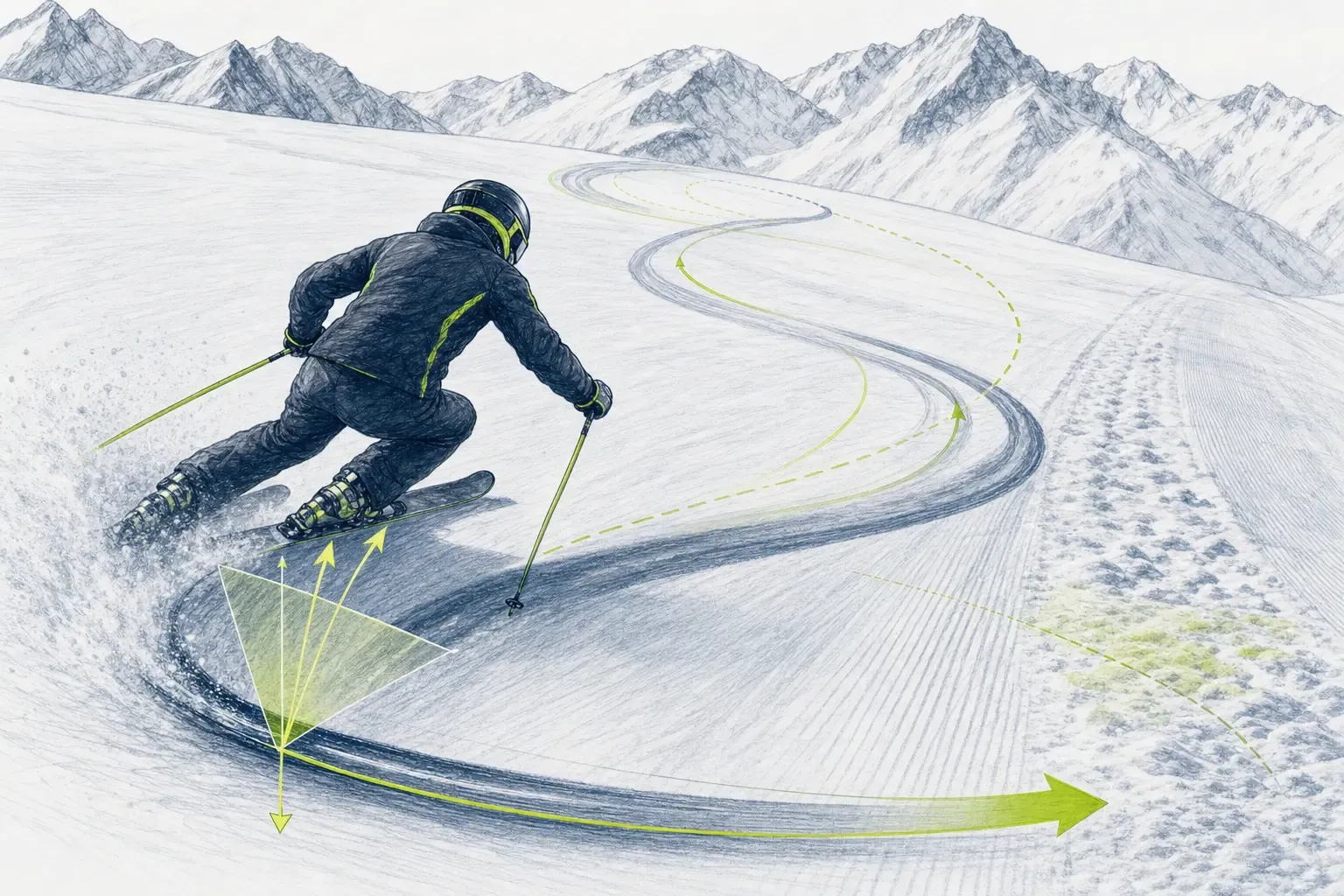
The run should be smooth, attentive, and appropriate to the conditions. Intensity increases gradually. The skier may start with larger turns and lower speed, then change the radius, rhythm, or pressure on the skis according to the training goal. The point is not to show performance, but to gather information: how the edge holds, what the snow resistance is like, where the surface is harder, how the body reacts to the cold, and whether the movement feels stiff.
A warm-up run can also reveal an unusual feeling from the ski boot, pole, or ski. However, it does not replace equipment checks, professional servicing, or correct binding adjustment. If there is any suspicion of a fault or incorrect setup, stop and check the equipment, not keep going for a “test” run.
Research in alpine conditions has shown that active warm-up can raise body temperature, heart rate, and mobility. In junior alpine skiers in freezing conditions, active or combined warm-up produced better results than passive warming alone. This does not, however, allow one universal procedure to be derived for every child and every type of weather.
Warm-up run for children
For children, the first run should be simple, safe, and easy to understand. The course or open slope should match the age, technical level, visibility, and traffic density. Younger children often prepare better with one clear movement task or a short game than with several technical instructions at once.
The coach watches mainly the stability of the stance, spatial awareness, reactions to speed, signs of cold, and whether the child is focused. A warm-up run should not be a test of courage or a contest for the highest speed. After a long wait, a cable car ride, or a break in training, it may be necessary to activate the body again.
Race context
For a racer, skiing on snow is usually one part of a broader pre-start routine. Observations of training among elite alpine skiers describe a combination of physical warm-up, skiing warm-up, course inspection, and reactivation before the start. The exact order and extent are adapted to the discipline, weather, available slope, and waiting time.
A warm-up run should be distinguished from the official inspection of the race course. Entry onto the course, the way the inspection is carried out, and the movement of racers are governed by the current rules and instructions of the jury or organizer. The race course is therefore not automatically a place for free warm-up runs.
Typical mistakes
- too high a speed right on the first run,
- a demanding exercise without a proper warm-up,
- too many technical instructions for a child,
- ignoring hard snow, fog, cold, or traffic,
- standing still for too long after warming up without reactivation,
- mixing up a warm-up run with a timed run or a course inspection.
From a coach’s perspective, a good warm-up run is a brief check of readiness, not a test of performance. It should leave the skier feeling the snow, controlling speed, and ready to safely move on to the main training task.
Sources and further reading
- FIS consensus statement on warm-up and cool-down in competitive alpine and freestyle skiers and snowboarders
- FIS – Alpine Skiing Documents, current International Competition Rules
- Gass, Moran: Warm-up: Efficacy of a program designed for downhill skiing
- McGawley et al.: Comparing Active, Passive, and Combined Warm-Ups Among Junior Alpine Skiers in -7°C
- The Training of Olympic Alpine Ski Racers
- Practicing Sport in Cold Environments: Practical Recommendations to Improve Sport Performance and Reduce Negative Health Outcomes