What a pre-start routine is
Pre-start routine is a practiced sequence of actions and thoughts that the skier carries out immediately before a race run. It may include checking equipment, a short movement activation, breathing control, a reminder of one task, and a steady procedure when entering the start gate.
In sports psychology, a pre-performance routine is described as a systematic set of task-related actions and thoughts that an athlete carries out before the actual performance. Research across sports shows that practiced routines can support performance even under psychological pressure. However, they do not guarantee a good result and do not replace technical, fitness, or tactical readiness.
A pre-start routine is narrower than an all-day pre-race plan. That includes, for example, arriving at the venue, warming up, inspecting the course, eating, and timing the warm-up. The pre-start routine mainly concerns the last minutes before the run.
What it is for
The start environment changes: a different slope, weather, surface, waiting, and the course of the race. The routine gives the skier a repeatable structure and turns attention to things they can influence. Conversations with World Cup racers showed that planned preparation and a stable procedure during race day helped them handle uncertainty, pre-start worries, and changing conditions.
The goal is not to remove all nerves. A certain level of activation before performance is natural, and its intensity can change as the start gets closer. What matters is that the child remains able to listen to instructions, perceive the situation, and carry out their task.
What the routine can include
An appropriate routine is usually short and has only a few clear steps:
1. Organizational check: correct bib number, goggles, helmet, gloves, and buckled ski boots. Before buckling in, snow must be removed from the sole. Binding settings or other expert adjustments to the equipment are not done on the fly at the last moment. 2. Maintaining physical readiness: simple dynamic movements, leg work, short hops, or movements that mimic a skiing stance. The activation should not tire the skier or reduce stability at the start. 3. Calming down and organizing attention: one or several conscious breaths, a short cue word, or a simple image of the start of the run. Breathing, imagery, and self-talk make the most sense when the athlete knows them from training. 4. Process task: a reminder of one key intention, such as the rhythm of the first gates or an active push out of the start. Too many technical instructions just before the run can overload attention. 5. Start trigger: a fixed gesture or word that helps the skier end preparation and move on to performing the run.
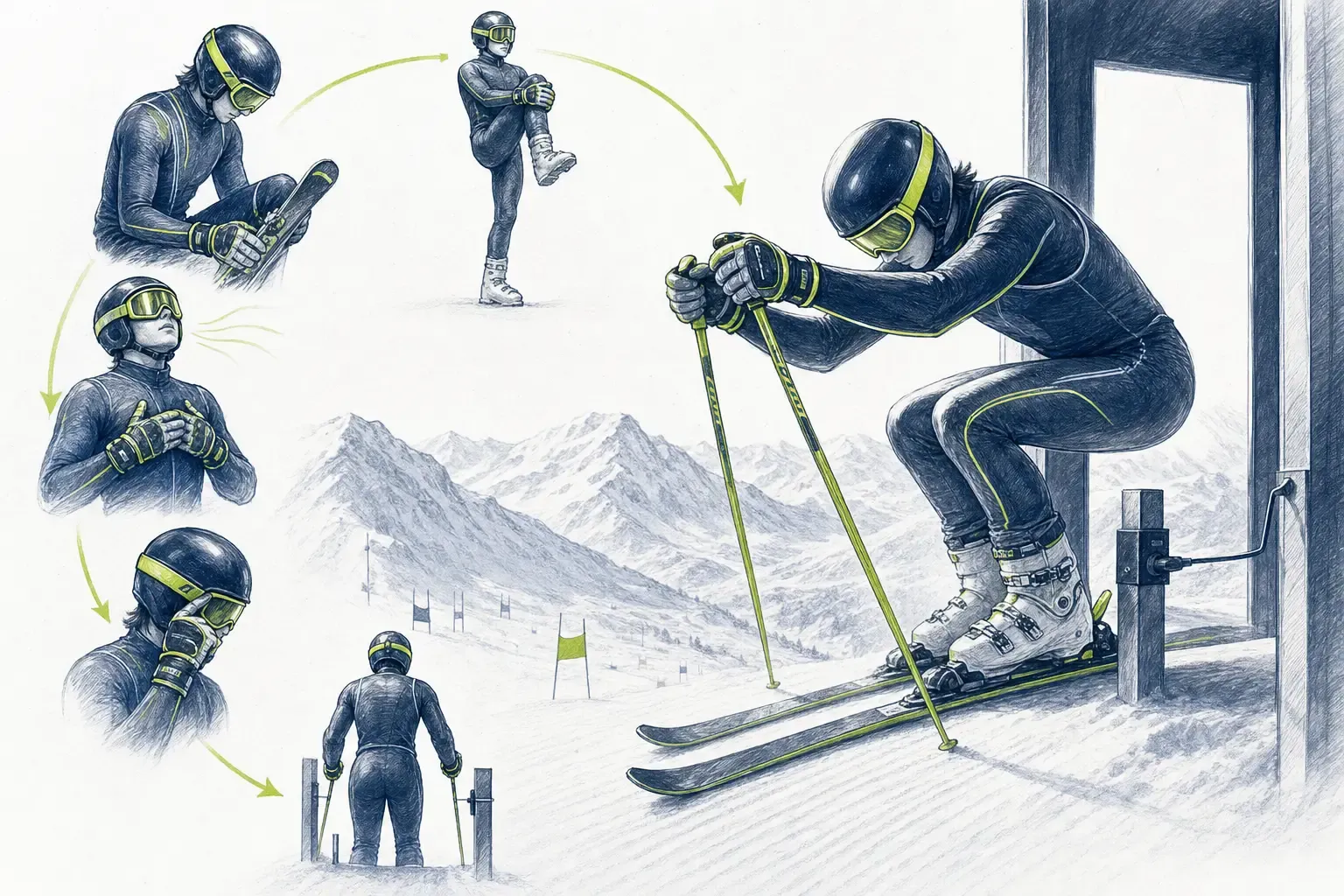
The FIS expert consensus on warm-up in competitive alpine skiing emphasizes raising body temperature, mobility, neuromuscular activation, and sport-specific preparation. It also points out that the athlete should arrive at the start ready, not tired. Activities in the start area should be simple and doable without lots of equipment.
Pre-start routine for children
A younger child needs fewer steps, clear naming, and calm guidance. A beginner routine can, for example, look like this: check my gear – move my legs – exhale – remind myself of one task – listen to the starter. This is not a universal rule; the content is adjusted to age, experience, temperament, and race conditions.
The routine is learned during training and practice runs, not only at important races. As experience grows, the skier should gradually take responsibility for carrying it out. The FIS consensus recommends an educational approach for young athletes that supports their later independence.
Rules and training practice
Rule: The official start procedure, start order, and the starter’s instructions always take priority over a personal routine. The racer must be ready at the assigned time and must not delay the start with their own procedure. Specific provisions follow the current FIS rules and the rules of the event.
Training practice: The routine should be stable, but not rigid. If a race is interrupted, the order changes, or there is a long wait, the skier needs a shortened reset version: warm up again, check the equipment, exhale calmly, and bring attention back to one task.
Typical mistakes
- copying the rituals of an adult or elite racer without understanding their purpose,
- too many technical instructions right before the start,
- overactivation, after which the child is tired or sweaty,
- constantly changing the routine based on the latest result,
- dependence on the exact order of actions to such an extent that an interruption triggers panic,
- focusing on placement instead of a doable task,
- late arrival in the start area or improvised equipment check.
Coach’s view
The coach does not create the routine for the skier, but helps them find a simple and repeatable procedure. Before the start, they use short, familiar phrases and watch whether the child needs to be activated, calmed down, or left for a moment without further instructions. A good pre-start routine is not a superstition or a theatrical gesture. It is a practical skill that makes the transition from preparation to skiing easier.
Sources and further reading
- FIS – Alpine Skiing Documents: current International Competition Rules (ICR)
- International Ski and Snowboard Federation consensus statement on warm-up and cool-down in competitive alpine and freestyle skiers and snowboarders
- FIS consensus statement – full text in PubMed Central
- The effectiveness of pre-performance routines in sports: a meta-analysis
- Experience and Management of Fear in Men's World Cup Alpine Ski Racing
- Preparatory routines for emotional regulation in performance enhancement
- Competitive anxiety responses in the week leading up to competition: the role of intensity, direction and frequency dimensions
- Pre-start Anxiety Self-regulation Methods of Top Alpine Skiers