What is a vlásenka
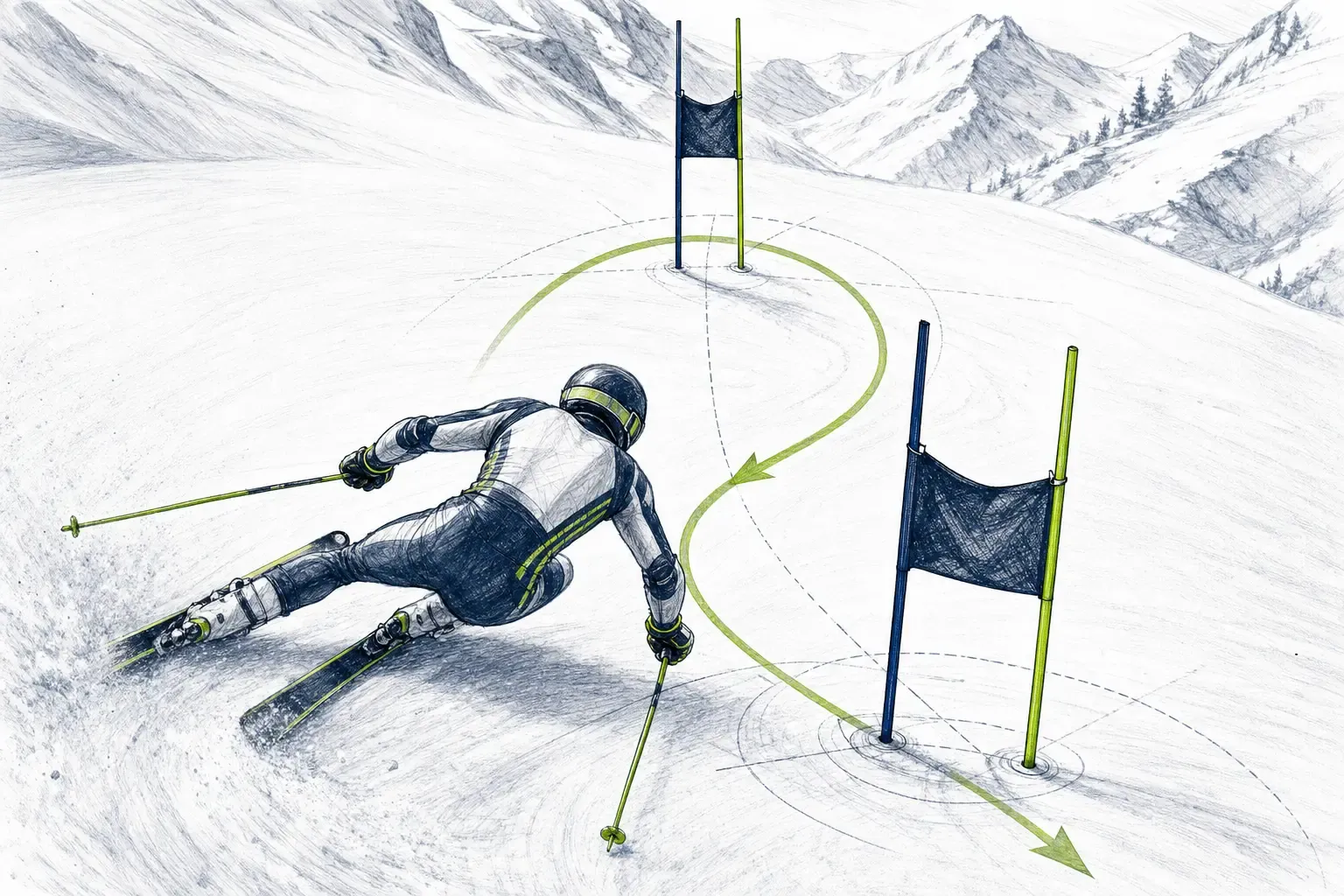
Vlásenka (in English hairpin) is a slalom combination consisting of two consecutive closed gates set in one line. The racer must therefore pass two separate gates correctly within a very short section and make quick changes of direction. A vlásenka is not one gate or just a pair of poles; under the rules, it is a combination of two numbered gates.
The name comes from the shape of the line taken, which from above resembles a bent hairpin. In Slovak racing terminology, the term vertical double combinationis also used. It should not be confused with a vertical or with a combination referred to by the English word flush: that consists of three to four closed gates, while a vlásenka has two.
Vlásenka in slalom rules
Vlásenka, together with open gates, vertical combinations and delay gates, belongs among the basic elements of a slalom course. The gates in a hairpin must be set in a straight line. In the standard rules of alpine slalom, a small spacing of 0,75 to 1,00 m is used at gates in a combination; the width of a slalom gate is 4 to 6 m. However, the exact number of combinations and dimensions for a specific race are always set by the current ICR FIS together with any national additions and age-category rules. For example, the current American specification for U16 and older categories states three to six vlásenkas, while for U12 it allows at most two. Such a national rule cannot be automatically transferred to Slovak or other races.
The racer must correctly pass both gates of the combination. It is not enough to go around the visible inner poles without following the prescribed gate line. Judging a correct passage, any gate fault, or a return after an error is governed by the current competition rules.
How to ski a vlásenka
From a training point of view, a vlásenka is not skied as two unrelated gates. The skier should already perceive the position of the second gate and the exit point on the approach. A well-chosen line allows the combination to be skied smoothly; an overly direct or late approach leads to hard braking, loss of balance, or catching the pole.
In practice, the coach mainly watches:
- controlled speed before entering the combination,
- enough space to finish the first turn,
- a quick but calmly guided edge change,
- a stable torso and hands ready in front of the body,
- the gaze directed through the combination toward the exit,
- a return to the normal course rhythm right after the second gate.
The goal is not to make as many movements as possible in the combination. An effective run is usually compact: the skis change direction under the body, the skier stays balanced, and does not rise unnecessarily between the gates. At the same time, the course setter should place the combination in the terrain so that it tests technique but does not require excessive acrobatic or sudden braking maneuvers.
Children and practice
With children, the hairpin is included only once they can safely handle the basic slalom turn, rhythm changes, and orientation between individual gates. What matters is not just age group, but also motor maturity, experience, and the current snow quality.
In training practice, it can begin with a clear pair of short training poles or soft brushes, with enough space before and after the combination. Only after understanding the line is higher speed added, full slalom poles, or a more demanding connection to the surrounding gates. The specific spacing and difficulty are determined by a qualified coach according to the rules, terrain, and level of the group.
Typical mistakes
The most common mistake is focusing only on the first pole. The skier goes into it too directly and by the second one no longer has room for the turn. Other mistakes include abrupt braking inside the combination, leaning back, lifting the hands, a late edge change, or eyes fixed on the pole instead of the exit.
The coach therefore judges not only whether the child “got through” the combination somehow. They also watch the setup before the hairpin and the quality of the exit. A well-executed hairpin does not disrupt the rest of the course; an unsuitable entry, on the other hand, can still show up in several following gates.
Sources and further reading
- FIS – Alpine Skiing Documents, current International Competition Rules (ICR)
- U.S. Ski & Snowboard – 2026 Alpine Competition Guide, PDF
- U.S. Ski & Snowboard – 2026 Alpine Competition Guide
- U.S. Ski & Snowboard – Alpine Competition Officials Education Resources
- FIS – Para Alpine Skiing Rules and Regulations, version of 1. July 2025
- FIS – Para Alpine Skiing Rules and Regulations, version of 13. November 2024
- U.S. Ski & Snowboard – 2021 Alpine Competition Guide