What a bib number is
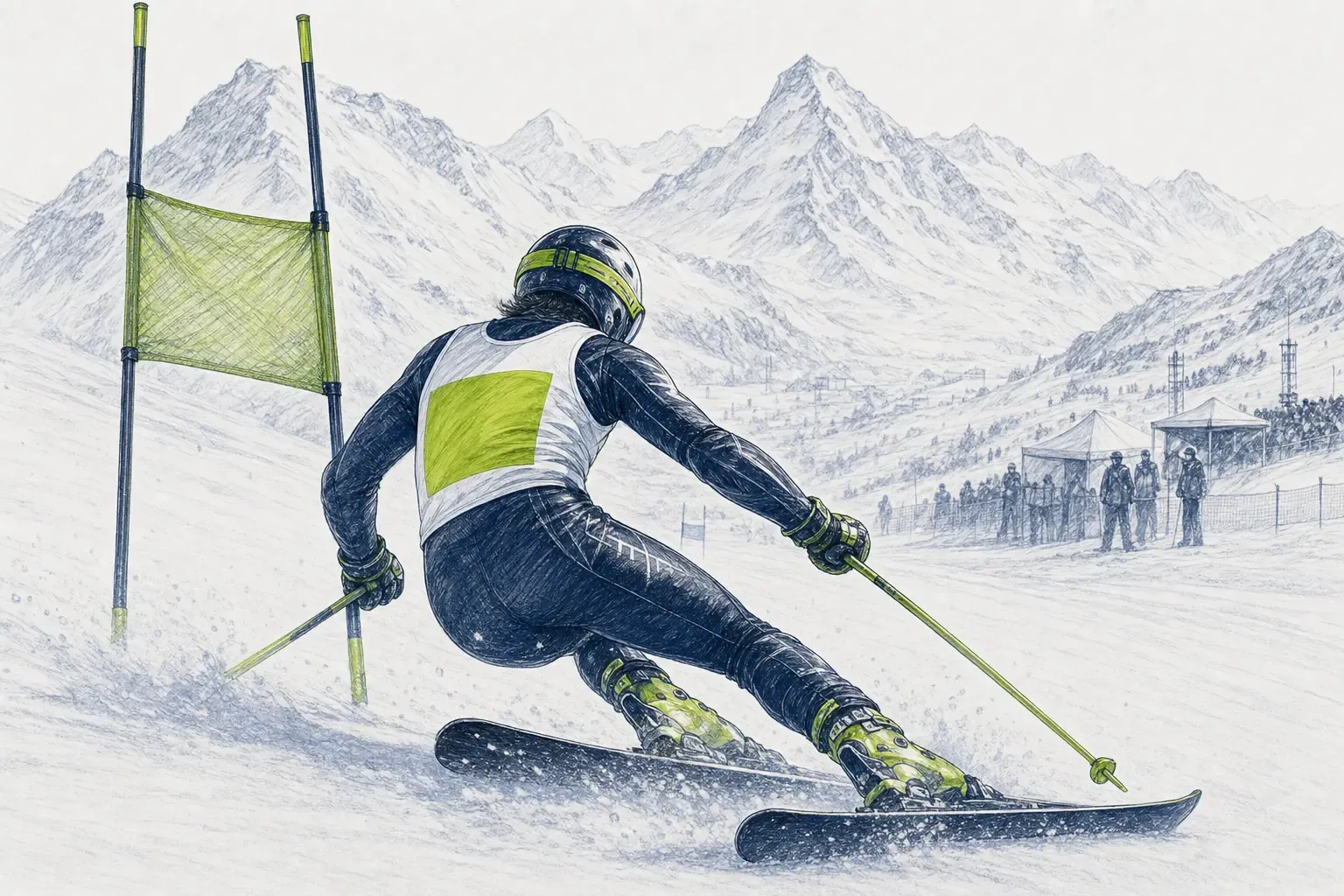
Bib number is a number assigned to a racer for a specific competition or race. It is shown on the official racing bib, often referred to by the English word bib. In everyday speech, the term bib number refers to both the number itself and the entire bib.
The number links the racer to the data on the start list and in the results. It is used by judges, the starter, timing, announcers, coaches, and organizers. A racer may have a different number at different races; it is not a permanent personal identifier.
A bib number is not always the starting order
Bib number, starting order, and final placing are three different pieces of information:
- bib number identifies the racer,
- starting order determines when the racer should set off on the course,
- placing shows their position in the results.
In the first run of a race, the number may match the order on the start list, but this cannot be relied on in all formats. In a regular two-run slalom or giant slalom, the order for the second run is determined according to the relevant rules and the results of the first run. The racer usually keeps the original bib. A skier with number 12 therefore does not have to start twelfth in the second run.
What matters is always the official start list and the instructions of the start judges, not just the number on the bib.
What the rules require
The FIS international alpine skiing rules state that all racers must wear an official bib during the race. Bibs used in one competition must have the same shape and size; the fastening method and the number design must not be changed either. The design and advertising markings are subject to separate FIS rules.
A racer must therefore not cut, fold, turn inside out, tape over, or alter the bib’s fastening in any way. If they receive the wrong number or the bib is lost or damaged, this must be reported immediately to the organizer or the judge at the start. The replacement solution must be determined by the organizer according to the competition rules.
The number itself is not a timing device. The time is recorded by the approved timing system and then assigned to the correct racer. Accurate identification of the number is therefore also important in manual backup timing and results checking.
Practical meaning for a child
In children’s races, the start number is a simple orientation aid. It helps the child know when to get ready, and the coach can find them more easily in the start area. However, the number must not replace checking the name, category, and start list – especially if more races are taking place that day or new bibs are being handed out.
A proven organizational routine before the start is:
1. compare the number on the bib with the official start list, 2. put it on top so the numbers are readable, 3. check that the straps are not twisted and do not restrict movement, 4. find out the current start order and approximate preparation time, 5. if there is a discrepancy, ask the coach or the race official.
A younger skier should know their number by heart, but an adult should also verify their name and category. At the same time, the coach explains that a low or high number alone does not predict the result. Course conditions may change, but performance still depends mainly on skiing, handling the course, and following the rules.
Typical mistakes and misunderstandings
A common mistake is the belief that number 25 automatically means 25. place or always 25. start. Another problem is covering the number with a jacket, swapping bibs between children, or heading to the start based on guesswork without checking the start list.
From a coach’s point of view, working with the start number is part of basic race independence. The child gradually learns to check their details, follow the calling of numbers, and arrive in the start area on time – without unnecessary stress and without disturbing the preparation of other racers.
Sources and further reading
- FIS – International Competition Rules for Alpine Skiing, article 606.5 Start Numbers (Bibs)
- FIS – Alpine Skiing Documents
- FIS – Event Marketing, advertising rules and markings of competition equipment
- FIS – Timing & Data, timing rules and documentation
- FIS – official sample start list for alpine races
- U.S. Ski & Snowboard – 2026 Alpine Competition Guide
- U.S. Ski & Snowboard – Alpine Competition Resources