What is ski radius
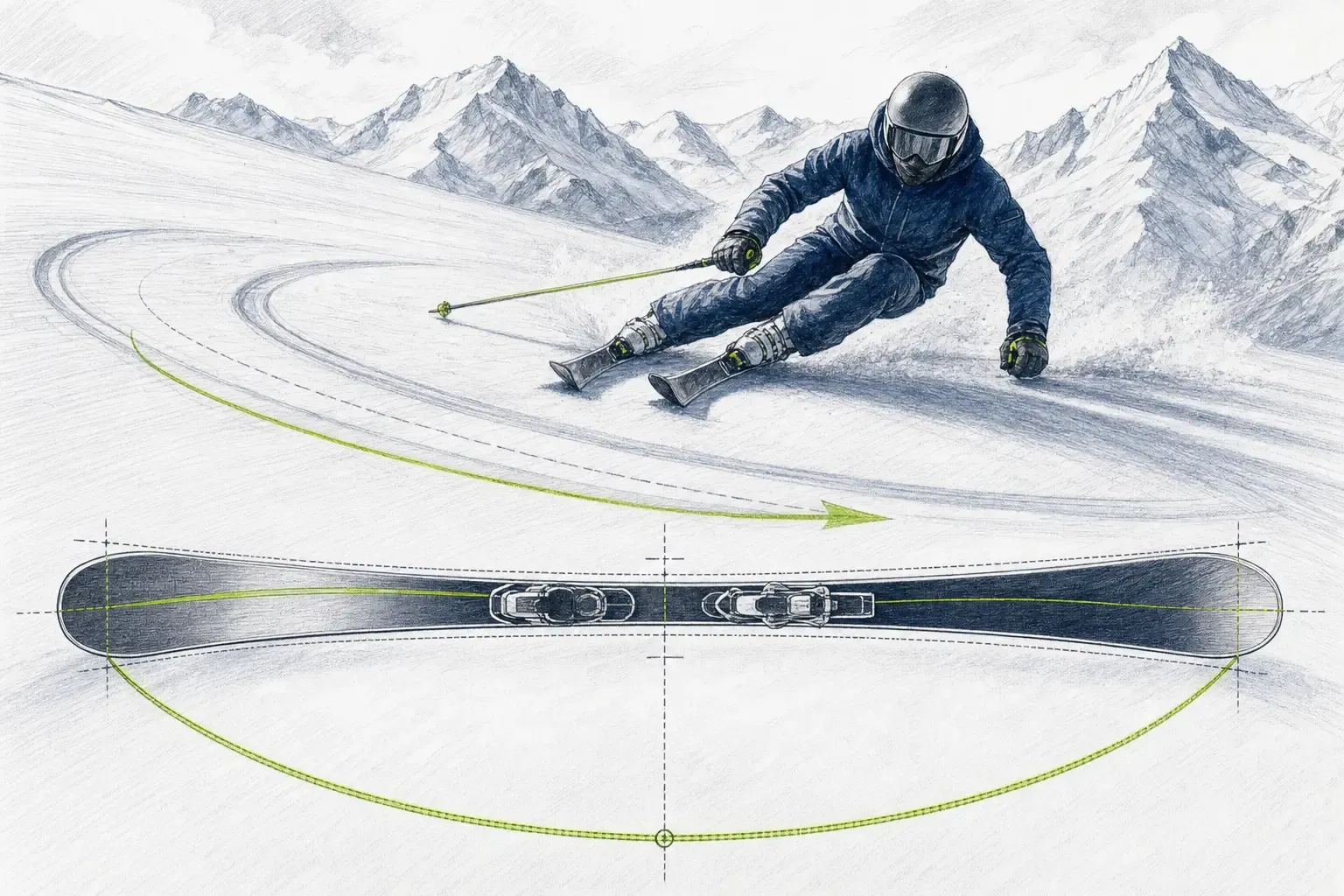
Ski radius, more precisely sidecut radius (sidecut radius) is a geometric measurement given in meters. In simple terms, it expresses the radius of the circle that the shape of the ski edge approaches between the wider tip, narrower waist, and wider tail.
A smaller number means a more pronounced sidecut and geometry that supports a shorter turn. A larger number indicates a straighter sidecut, typical for longer turns and speed events. When checking race skis, the FIS does not determine the radius only according to the manufacturer's figure: it uses a standardized procedure based on a reference length and ski widths at precisely defined points. The method follows ISO 6289.
Ski radius is not the radius of every turn
A common misconception is the idea that a ski marked R 13 m will always create a turn with a radius of 13 meters. The figure on the ski describes its geometry, not the skier's actual track.
The actual turn is mainly affected by:
- edge angle,
- ski flex and camber,
- pressure distribution along the length of the ski,
- speed,
- snow hardness and surface irregularities,
- the share of carving, skidding, and steering,
- the skier's technique and body proportions.
In a clean carved turn, the edged and loaded ski bends and can create a turn different from its nominal radius. In a skidded turn, the direction of travel is not determined only by the sidecut, so even on a ski with a larger radius you can make a short turn. Conversely, a ski with a small radius does not have to turn short all the time: the skier can lead a longer turn with less edge angle or controlled skidding.
The U.S. Ski & Snowboard methodology also distinguishes the ski's geometry from the size and shape of the turn being made. A skier's development includes the ability to vary short, medium, and long turns and adapt them to the terrain, speed, and task.
Practical significance when choosing skis
Radius helps estimate what kind of skiing a ski is designed for, but it cannot be assessed on its own. Ski length, stiffness, waist width, construction, profile, and intended use are just as important. Even for the same model name, you need to look at the figure for the specific ski length.
A ski with a smaller radius usually responds to edging with a more willing turn into a shorter arc. A ski with a larger radius naturally supports a longer arc, but to guide it safely it may require more space, appropriate speed, and more precise skier input. This does not mean that the smallest radius is automatically the easiest or safest.
Radius on children’s skis
For a child, radius is only one part of the choice. Priority goes to a ski with suitable length and flex for the child’s height, weight, strength, motor skills, and how it will be used. A ski that is too long or too stiff can be hard for a light child to control, regardless of the radius figure.
A beginner first learns to regulate direction and speed through balance, steering, edging, and appropriate skidding. It is not appropriate to demand clean carving just because the ski has a pronounced sidecut. For a young racer, the ability to create different turn sizes, change them while skiing, and not be led only by the ski’s geometry develops gradually.
The coach therefore watches whether the child:
- can initiate a turn intentionally, not just by accidentally catching an edge,
- controls speed through turn shape,
- can vary the rhythm and size of turns,
- stays balanced over the skis,
- uses skis appropriate to their strength and level.
Official coaching methodology also points out that ski size and sidecut affect the turn that the coach demonstrates. The demonstration must therefore match the equipment, age, and ability of the child.
Racing context
Different geometries are used in alpine disciplines. Slalom requires quick changes of direction and short turns, giant slalom longer turns, and speed disciplines even more space and significantly straighter skis. FIS therefore sets technical requirements for selected disciplines and categories, including minimum radius, length, and ski width.
Current FIS specifications for the 2026/27 season have been in effect since July 2026. Exact limits should always be checked according to the discipline, age category, competition level, and the relevant national rules. An older figure, a general manufacturer’s table, or the radius of a different length of the same model may not be enough to confirm that the equipment complies.
Typical mistakes
- Confusing a ski’s radius with the actual turn radius.
- Choosing a ski only by the smallest number.
- Comparing radius without considering the ski’s length, stiffness, and intended use.
- The idea that carving always means the shortest possible turn.
- Using the term “short radius” without distinguishing whether it refers to ski geometry or to the size of the turn being skied.
Coach’s view: Radius is a feature of the equipment, not a substitute for technique. Good skiing shows when a skier can deliberately change the shape and size of a turn, not when they copy the ski’s nominal sidecut in every situation.
Sources and further reading
- FIS – Specifications for Alpine Competition Equipment 2026–27, document page
- FIS – Specifications for Alpine Competition Equipment 2025/2026, technical definition and radius measurement
- FIS – Ski Radius Calculator: explanation of the calculation purpose
- U.S. Ski & Snowboard – Athlete Performance Profile
- U.S. Ski & Snowboard – Alpine Guide to Ski Fundamentals: Short Radius Turns
- U.S. Ski & Snowboard – Alpine Ski Fundamentals Level 100 Instructor Manual