What is the first run
First run is the first timed race run in competitions whose result is made up of two runs. Typical examples are slalom and giant slalom. In English rules and results, the term first run or run 1.
is used
The word run here does not mean a repeated lap or a training attempt. The racer takes a separately marked course from start to finish, and the recorded time counts toward the overall result. In standard two-run races, the sum of the valid times from the first and second runs decides the result.
What the first run determines Rule:
In the first run, racers usually start according to the official start list. Start bibs and their order are determined by the competition rules, points ranking, seeding, and the draw. So it is not simply the order of registration or arrival at the start.
The results of the first run are the basis for the start list of the second run. According to the general FIS rule, the first 30 classified racers are reversed: the racer in thirtieth place after the first run starts first in the second run, and the leader from the first run starts thirtieth. Under the conditions set out in the rules, the jury may use the reversal of the first 15. Racers after the reversed group continue in the order from the first run.
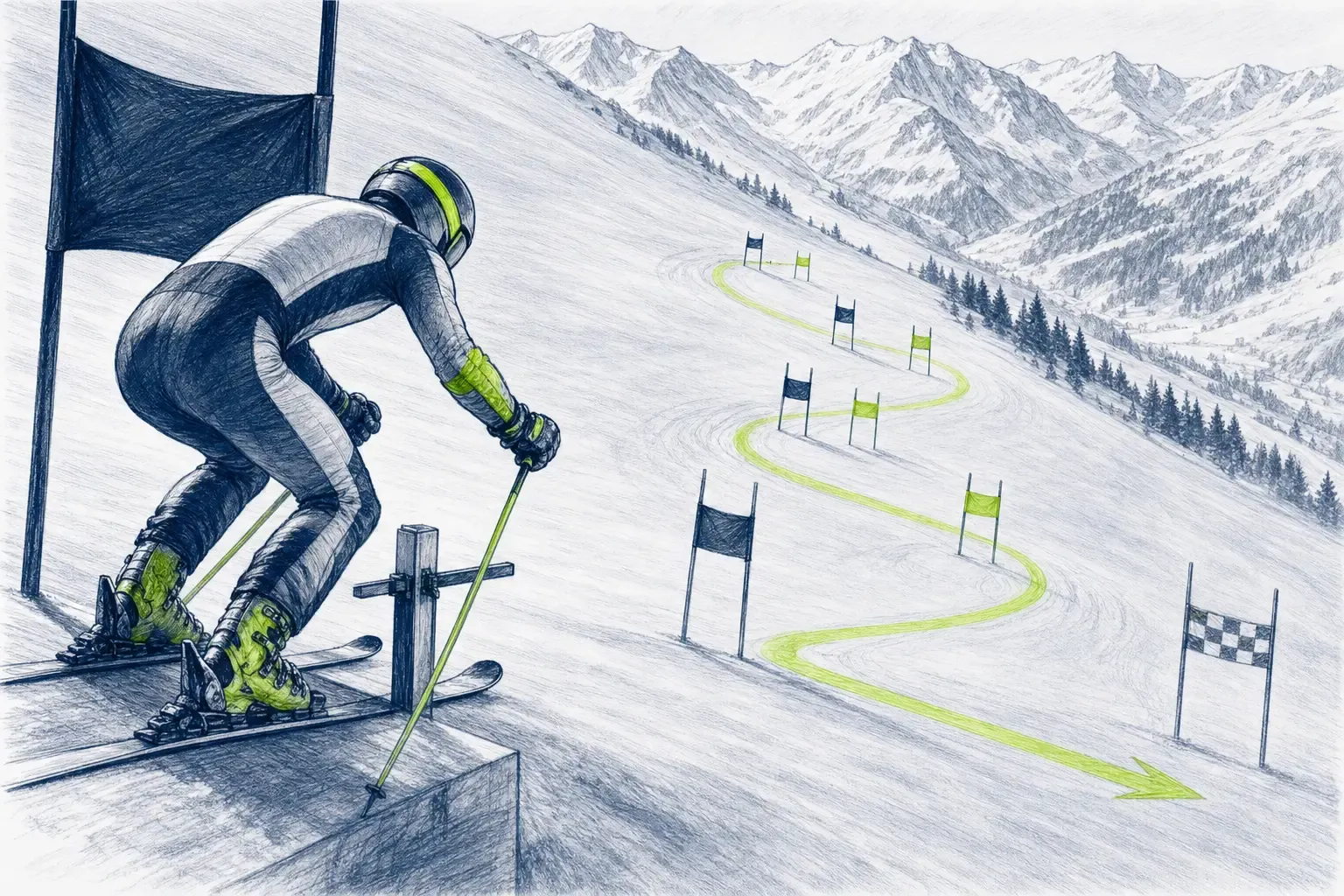
First run – technical illustration Ski Loko
First run in children's races
For a child, it is important to understand that the first run is not a warm-up
on a trial basis.
- They must start correctly, follow the prescribed line through all the gates, and finish the run. Missing a gate, a fall, a false start, or another rule violation can mean a did not finish result or disqualification. At the same time, it is not good to create the impression that a child must complete the first run without a single mistake. A reasonable goal is a safe, independent run that matches the child's ability and follows the rules. Short instructions help younger skiers, such as reminding them of the rhythm, looking ahead, or focusing on one important spot on the course. Too many technical instructions just before the start can be distracting.
- Common misunderstandings The first run is not a training run, it is not a training run, it is not a training run, it is not a training run, it is not a training run, it is not a training run, it is not a training run, it is not a training run, it is not a training run, it is not a training run, it is not a training run, it is not a training run, it is not a training run, it is not a training run, it is not a training run, it is not a training run, it is not a training run, it is not a training run, it is not a training run, it is not a training run, it is not a training run, it is not a training run, it is not a training run, it is not a training run, it is not a training run, it is not a training run, it is not a training run, it is not a training run, it is not a training run, it is not a training run, it is not a training run, it is not a training run, it is not a training run, it is not a training run, it is not a training run, it is not a training run, it is not a training run, it is not a training run, it is not a training run, it is not a training run, it is not a training run, it is not a training run, it is not a training run, it is not a training run, it is not a training run, it is not a training run, it is not a training run, it is not a training run, it is not a training run, it is not a training run, it is not a training run, it is not a training run, it is not a training run, it is not a training run, it is not a training run, it is not a training run, it is not a training run, it is not a training run, it is not a training run, it is not a training run, it is not a training run, it is not a training run, it is not a training run, it is not a training run, it is not a training run, it is not a training run, it is not a training run, it is not a training run, it is not a training run, it is not a training run, it is not a training run, it is not a training run, it is not a training run, it is not a training run, it is not a training run, it is not a training run, it is not a training run, it is not a training run, it is not a training run, it is not a training run, it is not a training run, it is not a training run, it is not a training run, it is not a training run, it is not a training run, it is not a training run, it is not a training run, it is not a training run. It is not a training run. It is not a training run. It is not a training run. It is not a training run. It is not a training run. It is not a training run. It is not a training run. It is not a training run. It is not a training run. It is not a training run. It is not a training run. It is not a training run. It is not a training run. It is not a training run. It is not a training run. It is not a training run. It is not a training run. It is not a training run. It is not a training run. It is not a training run. It is not a training run. It is not a training run. It is not a training run. It is not a training run. It is not a training run. It is not a training run. It is not a training run. It is not a training run. It is not a training run. It is not a training run. It is not a training run. It is not a training run. It is not a training run. It is not a training run. It is not a training run. It is not a training run. It is not a training run. It is not a training run. It is not a training run. It is not a training run. It is not a training run. It is not a training run. It is not a training run. It is not a training run. It is not a training run. It is not a training run. It is not a training run. It is not a training run. It is not a training run. It is not a training run. It is not a training run. It is not a training run. It is not a training run. Its time counts toward the result. A good first run does not yet mean victory. The result of two-run races is decided by both valid runs.
- The second run is not an exact copy of the first. The course is usually reset, so the rhythm, gate distances, and difficult sections can change.
- A higher start number in the second run is not a penalty. It results from the reversed order of the best-placed racers.
- A run and an elimination round are not always the same thing. In parallel disciplines, a run can mean a phase of the knockout bracket, not the first run of a classic slalom or giant slalom.
Coach’s view
Training practice: After the first run, the coach does not assess only the finish time. They watch whether the chosen plan was followed, how the key sections were skied, reactions to changes in rhythm, how the pressure on the skis was managed, and how stress was handled. Feedback before the second run should be brief and age-appropriate.
Information from the first run helps with preparation for changing surface and conditions, but it does not replace a course inspection for the second run. The racer must see the second run as a new task, not as an attempt to mechanically repeat the line from the first run.
Sources and further reading
- FIS – Alpine Skiing Documents: current International Competition Rules and World Cup rules
- FIS – Alpine Skiing, Para Alpine Skiing Timing & Data Documents
- U.S. Ski & Snowboard – 2026 Alpine Competition Guide
- U.S. Ski & Snowboard – Alpine Events: formats of individual disciplines
- U.S. Ski & Snowboard – Alpine Points: points scoring and start order calculation
- FIS – Para Alpine Skiing Documents: rules for competition runs and parallel formats
- FIS – World Championships Documents: rules for special competition formats