What is FIS
FIS is the abbreviation of the name International Ski and Snowboard Federation, that is, the International Ski and Snowboard Federation. The abbreviation comes from the original French name Fédération Internationale de Ski and was kept even after the official English name was expanded to include snowboarding.
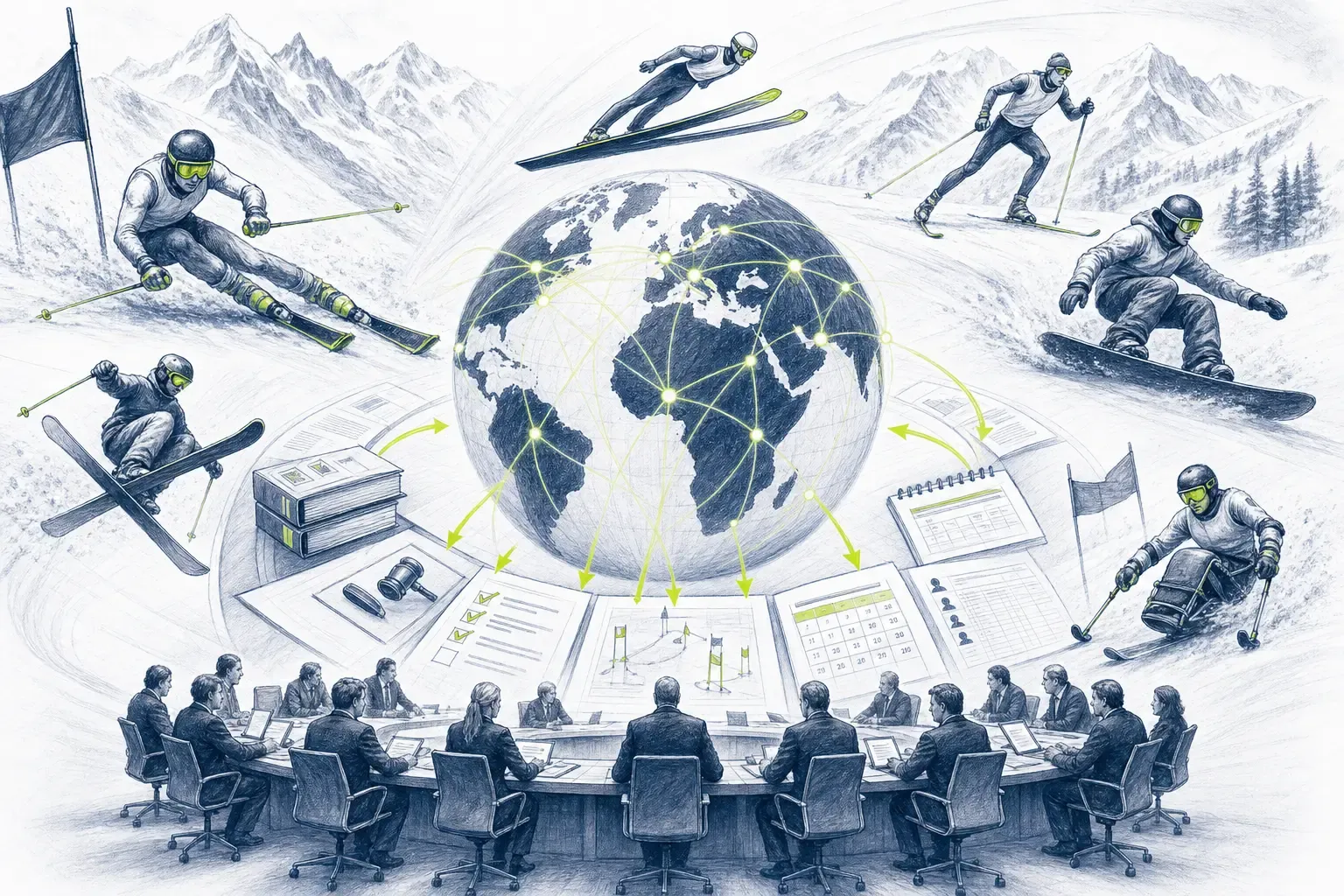
FIS is the worldwide governing body for international competitive skiing and snowboarding. It brings together national skiing associations and creates a common framework for disciplines including alpine skiing, cross-country skiing, ski jumping, Nordic combined, freestyle, freeski, snowboard, and para disciplines.
What FIS does
FIS issues statutes, international competition rules, technical regulations, and rules for individual series. It maintains the international calendar, results, rankings, and racer lists. Through its bodies and expert committees, it also regulates the work of technical delegates, referees, organizers, and other officials.
For alpine skiing, the basic document is International Competition Rules – ICR. It contains rules for race organization, the course, gates, start, timing, course running, protests, penalties, and the jury’s duties. Other documents cover, for example, FIS points, the World Cup, quotas, the calendar, or technical equipment requirements. The rules are updated continuously, so always use the current edition and check seasonal clarifications as well.
FIS, however does not directly organize every club or national race. The relevant national federation and the organizer are responsible for the domestic competition structure, race entries, and applying national rules.
What “FIS racer” and “FIS races” mean
FIS races are events included in the official FIS calendar and held according to the rules of the given discipline. The designation of a race as “international” does not automatically mean it is a FIS event.
To take part, an athlete must meet the requirements of their discipline and be registered through the national association. In alpine skiing, the results of eligible racers are used to calculate FIS points. These indicate performance classification; a lower point value generally means a better ranking. The exact calculation, limits and use of points are set by separate current rules.
FIS and children's skiing
A younger club member is usually not an FIS competitor. They compete in children's categories according to the rules of the national federation, regional competition or a specific series. FIS also issues regulations for international children's competitions, but these cannot be automatically applied to every domestic race.
Training practice: a coach may prepare a child for a later move into junior and FIS competitions, but FIS rules are not a training methodology. The content and load of training should be adapted to the child's age, biological and motor development, experience and safety. Early imitation of an adult FIS racer's program is not a federation requirement.
When it comes to equipment, it is always necessary to distinguish between FIS regulations, national rules and the manufacturer's recommendations. Ski dimensions, protectors, helmet or other technical requirements may vary depending on the discipline, age category and level of competition. Equipment eligibility must therefore be checked in the current rules of the specific event; professional binding adjustment belongs to a qualified service.
Common misunderstanding: the ten FIS rules
The so-called FIS rules for skiers' and snowboarders' behavior are general safety principles for moving on a slope. They are not the same as ICR race rules and do not replace local operating rules or legal regulations.
Coach's view
A coach working with racers must know which provisions are FIS rules, which come from the national competition regulations, and which are his or her methodological decision. Before a race, they especially check the current event notice, age and licensing conditions, permitted equipment and rule changes. Children should be required to understand safe movement, fair behavior and basic race discipline, not to memorize the entire competition regulations.
Sources and further reading
- FIS – Statutes 2026
- FIS – Alpine Skiing Documents and International Competition Rules
- FIS – General Regulations and Code of Conduct
- FIS – Rules and Terms of Reference for FIS Committees
- FIS – Official Publications
- FIS – International Ski and Snowboard Federation, disciplines and competition information
- FIS – Athlete Health Corner and Injury Surveillance Data